Friday, 14 April 2023

Role of UNSC in securing human rights with reference to case studies


UNSC meet: courtesy Current Affairs Adda 24/7

Abstract:

The research paper titled as Role of UNSC in securing Human rights with respect to case studies tries to cover the successes & failures of UNSC in different parts of the globe with the very specific focus on human rights protection. The United Nations Security Council is the most important part of the UN with enormous political clout over its member states. The intervention of UNSC in specific countries has changed the history of many countries forever.

The paper adopts an evidence based approach to also prove the shortcomings of the UNSC & how it can improve its track record on the same. The paper adopts a pragmatic, optimistic opinion about the UNSC role in securing human rights. The paper concludes that UNSC has to improve its structural issues to ensure that enough is done to protect the human rights of people.

1. Introduction:

Human rights refers to rights that is given to everyone irrespective of seeing their gender,class etc. Basic human rights are given to everyone the only reason being that they are humans is fine to make them entitled towards human rights in the world. The human rights in the world are under constant threat from multiple forces which can be both from the state & non state level actors.

The United Nations was formed in 1945 after the world saw one of the most catastrophic conflict in the form of world war 3 which killed up to 8 million people according to independent surveys, along with countless instances of human rights violations in the form of bodily crimes on women, targeting killings of global minorities, famines that were triggered deliberately in many parts of the world by imperial powers to name a few along the use of nuclear weapons, to prevent such conflicts in the future the institution named as United Nations was formed on 24 October, 1945 for the dual objectives to ensure that world peace is maintained & human rights is protected in each & every country. United Nations has a lot of verticals like UNHRC, UNSC which have been tasked with specific tasks. UN was formed after the league of nations which failed to protect human rights in the worldwide spectrum & instead fuelled the biggest onslaught on human dignity in the world war 2 due to its complacent decisions.(Why did league of nations fail. Here are some answers?,History on the net).

The UNSC is the most powerful body politic of UN as it looks up for world peace in the world which affects the human rights directly. . Human rights are also inalienable, meaning that the state may not withdraw any individual’s human rights except under conditions prescribed by the rule of law or (for some rights only) in situations of national emergency.(Human security: undermining human rights, Rhoda-E- Hasmann, February 2012)

The UNSC is perhaps one of the oldest bodies of the UN. It was incorporated in the United nations the day when UN was formed. The UNSC is headquartered in New York, USA. The presidency of UNSC unlike other bodies of UN is, rotatory in nature where every member state of the UNSC gets to chair the UNSC meet for every month, this type of presidency is called as rotational presidency. The UNSC has 15 members, 5 of whom are permanent, these nations are P5 nations namely, China-France-UK-USA-Russia, the other 10 are on a rotational basis & are elected by the UN general assembly. The UNSC is entrusted with protecting human rights in the member states.

2. UNSC & Human Rights:

The UN Has adopted human rights charters namely ICESCR(International convention on economics, social & cultural rights)was adopted by UN General Assembly on December 16,1966 but was implemented in the year 1976. The ICESCR has stated that all the people have the right for self-determination. Article 1 of the ICESCR states everyone has the right to self determination. The Covenant on Economic, Social, and Cultural Rights contains various Articles which provide recognition for the right to work according to Article. 6. The ICESCR has no provisions for interpretation and application.(IIGL : Paper 4 textbook,16:17:18). The international human rights legal regime precedes the discourse on human security by over forty years. Human rights were originally enshrined in the UN International Bill of Rights, which consists of the1948 Universal Declaration of Human Rights (UDHR), the 1966. International Covenant on Civil and Political Rights (ICCPR), and the 1966 International Covenant on Economic, Social and Cultural Rights (ICESCR). Some scholars argue that there is no evidence that when a state signs a human rights treaty, its actual human rights performance improves which makes the role of UNSC even more important as it covers most of the countries in its ambit & its resolutions passed can act as a valve which creates pressure on states if not binding. (Human security: undermining human rights, Rhoda-E- Hasmann,February 2012)

The UNSC can pass resolutions it seems that are in violations of the above-mentioned humanitarian laws. The UNSC has so far passed 2672 resolutions. The UNSC is responsible for maintaining the security of the world, it is but obvious to understand that the human security is directly a necessity to maintain the human rights across the globe. The number of threats facing human security & rights is enormous, some of the prominent ones are: drug abuse, narcoterrorism, ideological terrorism, fundamentalism, wars between 2 countries & climate change. (Human security: undermining human rights, Rhoda-E- Hasmann, February 2012)

Ideological terrorism & fundamentalism can take away the lives of many people at once.Many countries have become a target of fundamentalism & terrorism, some terror attacks that shook humanity were of: Paris terror attack which claimed lives of many people, needless to say that, right to life is the most important right as without it the rest of the rights become null & void, the Pulwama suicide attack on a CRPF convoy also shook the conscience of the world which led to India conducting targeted air strikes in Balakot afterwards, the Mumbai terror attacks which directly killed civilians in Mumbai in 2008 is also a stark remainder of the human rights violations that can come up with the deadly mix of fundamentalism & terrorism. Along with the pain & agony created by terror attacks, many a times, it also provokes harsh reaction by the victims which can lead to a ripple effect which results in more human rights violations, the best example in this regard can be of perhaps of the 9/11 attacks on USA where Al-Qaeda terrorists bombed 3 buildings which killed 2,997 people, this led the USA administrations of Bush & Obama respectively to launch a manhunt in Afghanistan & many more countries which led to arrests of people who may not be involved in the attacks, it also led to formation of Guantanamo Bay prison which was denied entry even to the UN team by the United states in early 2010’s, it also led to USA invasion of Afghanistan in 2001 which created a mess in Afghanistan in the long run which claimed lives of thousands of Afghan civilians, emerging of Afghanistan as a prominent route for narcotics smuggling & the subsequent loss of education rights for afghani women, the literacy rate in Afghanistan today stands at 37.8% according to World Bank. This explanation is also enough to tell that how UNSC responds to terrorism of all kinds is important for securing human rights in different parts of globe. This is precisely the reason why counter terrorism is discussed in forums meant only for human rights.(Commissioner of human rights, ORF, World bank)

The UNSC interventions have a decent track record in terms of both successes & failures.The UNSC has passed about 2672 resolutions till date on subjects of humanitarian intervention where required.(UNSC.com). Since, the resolutions by the UNSC are the last resort by the countries to intervene in disputes, the success of UNSC measures will be done objectively through this parameter in this research article.

3. Positive case studies where UNSC resolutions helped in protecting human rights

Given the complex nature of the UNSC where 5 nations are permanent along with being veto power i.e. where if one of the 5 nations disagree with the UNSC resolution then the resolution becomes null &; void, many experts believe that the veto power being in hands of countries which are in direct competition with each other over resources in different world, has delayed the implementation of some important UNSC resolutions like those related to Russia-Ukraine war & protecting of human rights have been stalled repeatedly due to the veto power. The history has shown that veto power is a tool that P5 nations use to keep their diplomatic relations with countries intact. For example: China has vetoed UNSC resolutions to declare certain Pakistani individuals as global terrorists multiple times from the decade of 2014-18, to build on strong China-Pakistan ties which point has been argued by critics. (Livemint).Despite such structural limitations the UNSC has converged on many issues of importance, like the resolutions of UNSC for cote d’ivorie or ivory coast in the African continent when the nation had undergone a civil war rising from political instability which led to the rebel forces to control significant tracts of land in Ivory Coast, it is said that the involvement of France in this entire issue worsened the situation, the French directly deployed their troops in the region, the rebels had seized parts of west ivory coast.The country was divided into half with rival factions controlling east & west respectively. There were 2 civil wars that happened in Cote d’Ivorie,mainly in 2004 & 2010 which killed about 3000 civilians & had created 30,000 refugees, this was quickly accelerating into a humanitarian crisis, the UNSC noting the extent of violence quickly swung into action by passing UNSC resolution 1528 which authorized the deployment of UNOCI. Over 6000 UN peacekeeping forces in 2004 & increased to 11,292 in 2011.Despite, France & China being on the opposite sides of the issue, the UNSC was able to maneouvre the resolution & ensure that the resolution is passed, the UN resolution gave quick results in Ivory coast with about 70,000 insurgents surrendering within 2 years getting reintegrated into the society, 2 presidential elections with opposition was conducted for the first time in Ivory coast with an active opposition in a peaceful environment, about 250,000 refugees returned by 2016 to their homeland within 6 years ofUN intervention. 

The UN also strengthened National commission for human rights decreased human rights violations, it also supported social cohesion with 1000 impact projects & bought down communal sensitive areas by around 80%.The case of ivory coast proves that UNSC can be an effective tool for protection of human rights. Today, Cote d’Ivorie is implementing SDG’s with full vigour in consultation with many countries. Within 8 years, the situation has stabilized in Ivory coast with help of UN Peacekeeping forces which was authorized by the UNSC where the ivory coast administration is present in all 108 divisions of the nation. The experiment of Ivory coast by UNSC proves that it is an effective player in protecting human rights.

4. Failures of UNSC in protecting human rights

Where there are successes there are also equal number of failures of the UNSC as a watchdog of human rights protector. The USA invasion of Iraq & Afghanistan were done by keeping the UNSC at ransom &  many a times without consultation though there were resolutions were tabled. UNSC resolution 678 which gave Iraq the warning to withdraw their troops from Kuwait till the January 1991 & had authorized the countries especially the NATO ones to go ahead the invasion. The NATO invaded Iraq in 1991 & defeated the Iraqi forces within no time, it is also called as A computer war where the television viewers were seeing the destruction of Iraqi forces on a live TV. 

The NATO forces were overwhelmingly American with estimates saying that 75-80% of the NATO forces soldiers were Americans, in fact the NATO forces were led by Norman Schwarfmann. The fallouts of Iraq war after the US war has led to debate the success & the UNSC action in this regard, the number of causalities in Iraq war was estimated to be more than 50,000 civilians, the bridge of death, connecting Kufra to Basra was also bombed by USA led NATO forces, the bridge was being used by the defeated Iraqi forces to retreat, many human rights activists also called this as a war of humanity.

The action of USA led forces in Iraq internally displaced millions of people & killed many people. The same UNSC role is in doubt when USA unilaterally invaded Iraq on the account of finding WMD’s & executed Saddam Hussein in the 2000’s, the UNSC was caught in a shock when this invasion/operation took place. The UNSC was not able to pass any resolution against this unilateral action by the USA,given the USA has a veto power. The UNSC actions in Iraq also cause many doubts in the minds of security advisors, as the country’s economy was bought to ruins with 2 wars in 12 years, it led to displacement of a government, along with giving rise to fundamentalism & killing lakhs of soldiers, denying women the right to education, creating refugees in Middle east & Europe of which repercussions are being felt today along with creation of terrorism in the entire world. 

UNSC sanctions related to economy also had a devastating impact on the lives of Iraqi civilians. Had the UNSC structure been more democratic , it would have been possible that the Iraqi civilians would have also enjoyed the fruits of development. The 2 Iraqi wars along with the catastrophic humanitarian situation that arised are considered as a failure of UNSC in protecting human rights.


5. Conclusion

From the research article its clear that like every institution, UNSC also has its own failures & successes in the field of protecting human rights. The failures have arised mainly due to the permanent veto power structure which is given to nations who have enforced regime changes, invaded countries, have serious disagreements between them, have a history of brutal colonial power & have done little for the implementation of the SDG’s & are also viewed with a skeptical lens in their own neighbourhood & in world at large. The UNSC must wake up to this failure and give the veto power to more responsible nations to ensure that it can be the human rights protector in the true sense.

6. References:

i. (A.Alnsarawi)

ii. (NCERT)

iii. (UN Peacekeeping forces)

iv. (Council)

v. t (UN-SDG)

vi. (Indian Institute of Governance & Leadership )

vii. (Sahistory)

viii. Human security: undermining human rights, Rhoda-E- Hasmann, February 2012

ix. (UN Peacekeeping)

Wednesday, 5 April 2023

National Interest vs Global responsibility: What should nations choose. Research Article

Credits: Springer Link

The blog here is from my assignment of Indian Institute of Governance & Leadership

 Abstract:

The literature suggests that any developing nation in this interconnected world must look forward to framing policies which suites its own national interest. The study argues that if national interest is safe then only a country has the resources, political will to take up global responsibility. The not so easy relationship between national interest & global responsibility has been argued with case study of India. This study tries to answer the question based on the economic structure, social structure, historical structure, political structure, legal structure of the country mentioned as a case study. The study applies a realist view along with a post colonialism view of international affairs to make the debate clearer. The study found out that nations usually prioritise national affairs over global responsibility.

1: Introduction

The study is aimed at analysing the national interest from a dynamic & a pragmatic point of view. The study is based on secondary research based from different sources like research papers, books, news articles to name a few. 

The author has also tried to establish a strong relation between how changing national interest has led to significant changes in the global responsibilities that countries wish to take up. Since, any policymaker would consider the economic security & territorial integrity as the most sacred parts of national interest hence the examples in the paper have been linked to it. The author has also taken an earnest effort to show examples of countries which have at multiple stages opted for national interest over global responsibility in changing scenarios. The author with the help of various research papers has come to the well informed conclusion that a country must choose national interest over global responsibility for its own safety, security & since global responsibility is determined heavily by national interest concerns it has to be considered while framing the policy for a country.

2. Objectives of the research study:

A. Understanding the concepts of national interest & global responsibility in

depth,

B. Understanding how national interest impacts global responsibility of a

country.

C. How national interests are chosen over global responsibility most of the

times

D. Why policymakers usually adopt the issue of national interest over global

responsibility in international relations.

Explaination: 

National interest is a key concept in international affairs which helps in foreign policy formulation. The historical background of idea of ‘national interest’ goes back to when the advancement of the modern state framework took place. It was and remains a significant component to portray the basic justification for conduct of states & statesmen in a compromising global condition.(Introduction to International Relations & Diplomacy 87). 

National interest doesn’t change but global responsibility does change routinely as power balance changes. The term, “Interest” comes from Latin, signifying it concerns it has any kind of effect to, and it is significant with reference to some individual or a thing. One logical definition portrays it as the general & continuous end for which a country acts & lives for. Every statesman lives for their national interest, whenever a summit at any bilateral or multilateral level happens it is represented by a person irrespective of their global responsibility. (Introduction to International Relations & Diplomacy 87)

National Interest is also one where one country places their interest first &  then uses its leverage in different international forums. National Interest demonstrates the goals of the state. It may be used polemically in political contention, to clarify depend or reprimand. National Interest also refers to the issues for which a nation is willing to go to war. (Introduction to InternationalRelations & Diplomacy 87)

National interest usually varies from nation to nation that influence their national policies &  their outlook towards international relations which directly changes their global responsibility. (Sumanth Bhattacharya, Impact of national interest & global responsibility on international order)

National interest is also sometimes directly proportional to the school of thought the country wants to keep as its priority, for example the democrats in USA system are argued to have an outlook which is more liberal in nature which makes them to keep the ideology of liberalism respecting human rights at the forefront.(Brittanica)

Though national interest is made up of different components but there are certain things which are accepted by all schools of thought within national interest except for Marxism. (Introduction to International relations & diplomacy 36).

Further information between global responsibility, national security has been expounded in the

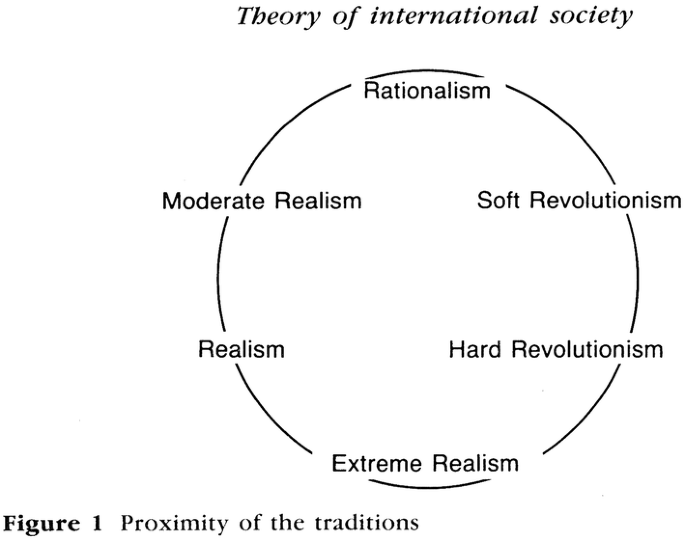
fourth section. Some aspects explained here. Section 3 primarily deals with how & why national interest is given importance over the global responsibility of a nation. The thought of maintaining territorial integrity, sovereignty is of extreme importance in all schools of thought ranging from realism, liberalism to English school and any other school of thought, the only difference point in these schools of thought is how much importance should be given to issues ofterritorial integrity, sovereignty, fighting fundamentalism while framing the international relation policy of a nation be given over other issues, for example: a realist will argue that the national interest is supreme, a liberalist will argue that first importance should be given to human values over territorial integrity, fighting fundamentalism but the person will say both are important.

The respecting of sovereignty &  existence of a country is considered at least on the face value by nations as it’s acts as a deterrent which can help to prevent war though there can be territorial disputes, hence we see most of the countries recognising the existence of each other (keeping aside the role of intelligence agencies, specific lobbies, violent proxy actors propped up by enemy countries in this issue who pose a threat to security apparatus of the concerned nation).

Similarly, every country also recognises the right of one country to have military & a proper security apparatus however the relation between the 2 nations may be. (Sood, The Unending Game)

Despite the changes in world order, there are some components of national interest which never change which again depends on the internal as well the historical issues of a country which nations never want to leave. For example:Majority of Indian policy makers view RCEP (Regional Comprehensive Economic Partnership) as something which infringes on national sovereignty as it led to the disappearance of Indian industries which led to India’s colonialisation. The RCEP was being viewed as an issue which was finishing off the manufacturing base of multiple industries which made India to withdraw from the agreement. The withdrawal of India from RCEP was accepted by persons across political ideologies &the common people at large with the Minister of commerce & trade Shri.Piyush Goyal stating that India’s RCEP decision was not last minute & it was imperative for India to leave the agreement for securing the economic interests.(Shukla, India’s trade protectionism & low productivity vicious cycle, Ideas for India, Research articles)

This national interest which is itself based on multiple issues determines the global responsibility of a country which is directly proportional to the stance of varying degrees of national interest given importance more specifically territorial integrity is adopted by policymakers.

National interest goes hand in hand with global responsibility of a country and both are important for the development of trade, maintenance of peace &; security, recognising sovereignty of each other. (Sumanth Bhattacharya, Impact of national interest & global responsibility on international order)

The term Global responsibility is a frequently used term when it comes to the international relations. Global responsibility of a country when spoken is applicable to individualistic nations.

The global responsibility of states is usually the core issue of the international relations which has given rise to different schools of thought such as feminism, green theory and is extremely dynamic in nature as social science issues,societal issues keep on changing from time to time.

Global responsibility in terms of international law is the duty to respond in case of violation of laws. (Baripedia). Global responsibility of a nation is directly proportional to the national issues concerned. For example: The building of Buddha Circuit in Uttar Pradesh is directly proportional to the rise of Buddhism in North east India, Bihar which serves as an electoral votebank for multiple political parties, this has led to people from different parts of world coming & visiting the circuit which has changed India’s position of global Buddhism very significantly.

Global responsibility also means the nation states tries to follow a set of responsibilities which has been set up in the world by either moral values or some shared values which are cherished by world. The liberalists in the international relations believe that it’s the duty of the nation to stay & fulfil some of their responsibilities towards the globe. The global responsibility of nations in the liberalist world view also includes the utmost respect towards human rights, climate issues, feminism among many other agendas which cannot be maintained within a geographical boundary. Hence the adoption of agendas like Climate change in the COP-26 summit is the arrival of green theory on the world stage as it has virtually made it a compulsion for nation states to save environment and keep it as a prominent topic of discussion while formulating international relations framework. (Introduction to InternationalRelations & Diplomacy 87,88,40,50: United nations website).

The best example when states showed their global responsibility from an realist scholar view point was behind the formation of the United Nations Committee of fighting terrorism, which was also based on global responsibility to maintain peace in world. However this arrangement was based looking into the realist

Another point of view who wanted to keep an international enforcement agency which agrees to the common point of maintaining peace & action against terrorism is taken accordingly hence pushing states to adopt some aspects which fight terrorism in an uniform manner which depends upon states.(UN Geneva convention)

However, if the opinion of a few select scholars mainly from the English school of thinking is to be considered there cannot be fixed set of values which can be achieved upon as the international “system” is always in a constant state of change &  anarchy where one cannot come at a genuine conclusion. The identification and solutions to global problems is at the forefront of International Relations and Diplomacy theory, the common problems of humanity give different versions of global responsibility and which responsibility should be prioritized is also a question as well as a bone of contention among scholars which will ultimately lead to a different definition of global responsibilities, hence what is a global responsibility is always contentious and a hotly debated topic. (Introduction to International Relations & Diplomacy 22,23,24,2526,33,40,44,45,46,47,48,50,87,88,93).

Therefore since there is no single definition of global responsibility of a nation & when it is varying from country to country it depends on what is the nation’s national interest first which will impact its global responsibility in a multi-dimensional way. Similarly in the world as of now there has been no sacred elements of global responsibility defined for a country. For example: A feminist will define global responsibility of a nation as one which takes women rights into the top account in an international relations perspective, a realist will bat for national security as the first point of an international relations policy. (Introduction to International Relations & Diplomacy 87,88,40,50)

However, given the diversity of global challenges the world faces its extremely pragmatic to conclude that there will be a set of definition that will apply to global responsibility, also in the current time where the world is increasingly polarised between ideologies there is no single component of global responsibility that a country will accept willingly or unwillingly. Hence there is no set of defined global responsibility in world order that one has to follow which makes states to follow their own version of global responsibility which comes out of their national interest.

Hence global responsibility of a country is that issue which is extremely debatable between nations. How a country views its global responsibility largely from the lens of their nation circumstances which frames as states believe if their nation is not existent then how can it fulfill its global responsibility, hence there is always national interest which is given importance global responsibility & subsequently its attitude towards world at large. For example: India’s inability to convert the short term gain achieved in the India Sri Lanka Accord was also an indicator on which issues did Indian policymakers make big mistakes whose impact was seen in the future on India’s responsibility towards Sri Lanka in 1990’s & the early 2000’s. This also determined India’s policy towards the island nation which further impacted its global responsibility. (Stuenkel, India: the next superpower?: Indias nationalinterests and diplomatic activism: towards global leadership?,LSE online.)

4. Examples

(a)India banned the export of rice varieties except for Basmati rice in the months which was done with effect from 9 September 2022 which was done to control the rates of food inflation & WPI (Wholesale Price Index) which is necessary for the maintaining economic security. This also means that there will be a food shortage esp. of rice in countries of middle east hence we have seen how India has adopted national interest of economic security over global responsibility. (Mishra,Livemint)

(b) India gave a strong rebuttal to the USA led human rights panels on its biased reports on Jammu Kashmir. This led to a confrontation between the Government of India & some politicians of USA who said India has abandoned its duty towards human rights. As an Indian first, many Indian social media users gave strong worded replies & called out their hypocrisy on various platforms. This also means when there is an issue related to territorial integrity & people not having any locus standi comment then the political parties unite against such a person.

(c) When USA threw & detained 100’s of accused terrorists from Afghanistan into Guantanamo Bay, it was accused of committing serious human rights violation &  when the UN team wanted to investigate the same they were not allowed in as it was viewed as interference into another country’s internal affairs. (Frankfurter, ACLU)

5.Research methodology used:

The research paper is titled as “National Interest vs Global responsibility: what should a country choose”. The objective of the paper is to understand 2 things, which are understanding how national interest impacts global responsibility & why in the world currently the nations are likely to follow their national interest while framing policy of international relations. The research methodology adopted by the researcher is secondary data. Ontology method has been used. The data has been collected from various sources from research papers, journals, newspapers like the Hindu & new Indian to further make the debate more comprehensive. The data analysis was done using the concept of phenomenology & linking the data which is taught in economics. The data pertaining is analysed using econometrics & qualitative economics study.

6. Conclusion:

The conclusion that we can infer from the entire literature is 3 fold one is, national interest determines the international relation policy & global responsibility, diplomatic policy which defines the global responsibility, two nations have historically adopted national interest over global responsibility & have not shied away to prefer national interest over global responsibility in multiple cases, third a nation should adopt national interest over global responsibility.Hence a country while framing international relations policy framework should undoubtedly adopt national interest over global responsibility.

7. References: 

(Introduction to International Relations & Diplomacy : Concepts)

(Krotz)

 (Markelu)

(Masters)

(Bhattacharya)

(Mishra)

(‘We too have views about Human Rights issues in the United States’: How

Dr S Jaishankar hit back on USA’s criticism of India)

(Sood)

(Jaishankar)

(Stunekel)

(Shukla)

(UNO )

Thursday, 30 March 2023

Power crisis in South africa:An Overview

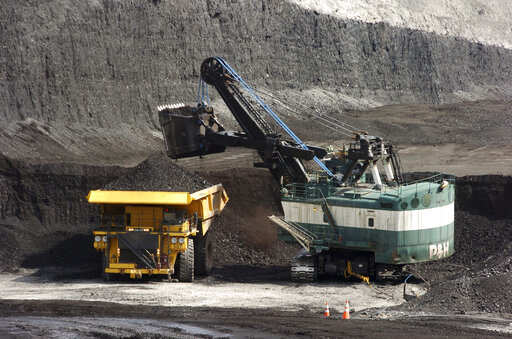
Introduction: South Africa is a country located in the southern tip of the African continent, its coastline stretches about 2850 kilometres, from the desert border with Namibia & maritime border with Madagascar. South Africa is also one of the largest economies of Africa along with being a part of BRICS grouping which is meant for developing economies, its proximity to global trade routes make it as an attractive investment option, however in the year of 2023, the emerging economy of south africa has been stuck with frequent power cuts & is close to power crisis in the country.South Africa mainstay for economy are sectors of: mining, transport, energy, manufacturing, tourism & agriculture. South Africa contributes up to 3.5% of world’s coal resources , the country’s production is about 3.3% of world’s annual production & it exports about 6% of world’s total coal exports. Needless to say, coal & power sector is the major engine for South African economic growth story. 

 Explanation: Most of these sectors are heavily dependent on power sector for their day to day functioning, in fact, South Africa’s growth rate of nominal GDP YoY is 2.0% down from 4.9% a year before it for which experts are also blaming the power crisis along with reasons like: slowdown in agriculture and global inflation cues. The energy crisis of south africa stems from coal crisis & also at a larger level where due to global disruption of supply chains, lack of proper alternatives to energy generation has meant that the pride country’s coal production has fallen steeply which has led to a lot of load shedding & subsequent, frequent shutting down of electricity in the country. The recent power crisis has its origins listed during the coronavirus period, when there was low demand for electricity. The sudden high demand on electricity meant that the estimation of SA Power generation firms was caught on the blindspot which led to the power crisis in year 2022. The year 2022 saw that the number of hours without power in South Africa increased from 1000 hours in 2021 to almost 1959 hours in 2022, and the year 2022 has been one of the most stressful years for South African electricity department as it is facing the worst crisis after almost about 10 years when in the year 2008, the overall hours of electricity shutdown was estimated to be around 900 hours which was considered a lot during those days, however with the tremendous growth of economy afterwards, it has led to pressure on electricity generation which has led to this crisis in making today. 
The energy crisis was huge even before the Russia-Ukraine war started on 23 February, 2022, even in the year of 2021 where its coal production fell steeply by the state power generation firms has been more or less stagnant since the coronavirus pandemic, About 85% of South Africa’s electricity is produced by the coal/thermal power stations which have been facing problems like lack of proper capital availability, ageing(ideally any thermal power plant should be renovated after surpassing the operational age of 25 years, which has not been done in South Africa so far), along with the issue of theft of coal whose instances have increased in the coal abundant regions of Northern south africa which has left the thermal power plants unprepared if we consider the views of experts. ESKOM average tariff prices for power in industrial areas has shot up from 43pc in 2013 to about 59 pc in 2021 which is a rise of almost about 50% in a comparatively short span of 10 years, which means that the demand is outrunning the supply of electricity.
The total energy sold by ESKOM to Industrial sector has also fallen from 75,000 units in 2004/05 to about 46,000 units in the current fiscal year. The South African Reserve Bank has estimated that the blackouts would cost the economy up to 51 million$ per day. The situation was so grave that the president of South African government even issued an investigation into Escom(which is south africa’s major coal company), whose revenue performance has been underwhelming in the last 2 years which has lost millions of dollars in irregular & sporadic spending along with structural issues due to covid crisis & the energy security issues which have plagued South African economy, which has prompted the government, industry experts to even think of diversification of south african energy streams in a phased manner, where solar energy seems to be the best possible alternative as the solar photovoltaic cells prices have fallen from $100 in 1975 to almost about 0.27$ in the year 2021, which means that its an opportunity for firms to invest in this sector which will have low production costs & even have a decent amount of share in the South African energy market by the next few years. The lithium charges in south africa is also one of the cheapest in the world. The solar energy ecosystem is available for which the biggest testimony is that it produces more solar energy than its BRICS counterparts of Brazil & India. 

Tuesday, 14 March 2023

India & G-20 Presidency: Multilateralism & Inclusive development

G20 logo: Credits: Economic Times

 The year 2023 will be historic in multiple aspects from India's viewpoint, some of the big things slated for the year are India's chances of lifting a cricket world cup after 12 years,76th independence year among many other achievements as well as opportunities, however the year is most important from a foreign policy point of view as India would be conducting the G-20 meet in the year 2023. G-20 refers to the group of 20 most economically powerful nations who have a contribution of almost 70% to the world's GDP.  The G-20 presidency is also an opportunity for rising countries like India to place its viewpoints on important issues at a global level. The G-20 is the premier forum for international economic cooperation. It plays an important role in shaping & strengthening global architecture & governance on major economic issues.India at present, holds the presidency which will last till November 2023.  

G-20 is also an unique setup which comprises of startegically important countries which hold sway over multiple regions in the world, which makes G-20 the ideal forum to discuss issues related to issues affecting humanity & the world at large. Since, 20 most important countries of the world which hold sway will be there, its natural that every country will be having their own comparitive advantages, which makes it as an ideal forum for multilateralism. The multilateralism in G-20 summit gives an opportunity to India, which makes India's importance as the centripetal force in advancing multilateralism. 

The G-20 presidency is an opportunity for India to present a vision for the inclusive development of the world's economy, as was stated by the honourable PM of India, Shri. Narendra Modi in his remarks at the Global South Conference which pressed for actions on issues concerning the world at large. Its no doubt that in todays world which is globalizing at a quick pace along with fast paced economic growth inclusive development cannot be possible in a bilateral or unilateral system, it requires the efforts of many nation states so that the ultimate goal is reached in a way which is of fulfilling the sustainable development goals among a host of goals which will help make the world a better place. 

An in depth study in the history of multilateralism which became more prominent after 1990's shows us that with economic liberalization in trade policies it led to multilateralism which has led to a changed inclusive development which has seen the world's GDP grow by leaps & bounds, along with greater cooperation between  countries not ideologically inclined to each other, one of the best examples can be the MDG's where polar opposite ideological nations of China & USA, declared their unanimous support along with taking steps to actually resolve those issues, these were later formulated into SDG's, not only development goals but with evolution of multilateralism over the years, there has been more economic democracy where the economy moves towards a demand side economy implying the common consumer has got more power to decide which products he/she wants to buy, this economic democracy is also an equally important objective of G-20 which would be discussed if not resolved in the G-20 summit to be conducted in India. 

The view of multilateralism from an inclusive development lens is important because it allows multiple counterbalances if any one country tries to bully the rest of the group for fulfilling their own demands, along with having multiple counterbalances, it gives rise to a healthy democratic environment in the world, where the countries will come on a common table to negotiate best according to their national interest which will by & large ensure that the voices of downtrodden also reach them. This is what is precisely expected from the upcoming G-20 summit in India, which since the days of Nehruvian foreign policy to Narendra Modi's foreign policy has always emphasized on being the voice of those countries who have been not been taken seriously in the foreign policy discourse.  

Given, India is a major economic superpower now with many natural as well as policy factors working in favour of India, the G-20 summit in India is an ideal platform for India to showcase its strength of economic democracy, civilizational values, cultural ethos to the world which will pave way for multilateralism in the world, which will lead to inclusive development in the entire world. 

Sunday, 12 February 2023

A short in depth mathematical overview of Central government expenditures: Union Budget 2023

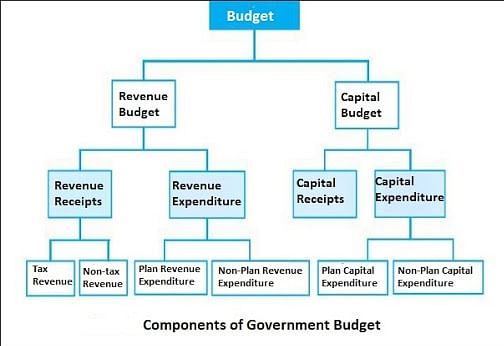
Photo from prepp by collegdunia


 A. Introduction: 

The budget is an annual financial statement of the government of India which details the reciepts & expenditures by the government of India in a very detailed manner. The union budget for the financial year 24  was announced on 1 Februrary 2023 with a vision for amritkaal

This year budget was unique for many aspects one among them being that this was the last full time budget of this term of the Narendra Modi government. The second unique issue was of rising the Capital expenditure by a whopping 33%. Usually in the budgets the expenditure part is always dealt with a lot of focus to ensure it as a confidence building measure with the masses at a time.

B. Basic definitions: In economics, there are generally 2 kinds of expenditure, one is revenue expenditure  is the part of the budget which does not  lead to creation of assets in short or long term. It may create assets indirectly but it does not create assets directly. Best examples can be of pensions, salaries to employees, welfare schemes,defence budget etc. 

Though these expenses can create social welfare but they do not create direct capital value in the economy.The other kind is of capital expenditure which should either result in creation of assets or in reduction of liabilities for the government. It has a direct affect on the total fiscal deficit as well. 

C. Prominent verticals analysis: 

Pensions expenditure: Pensions are generally given to the people who have retired from the service. In India, currently the national pension system (NPS) is in force in India. In this section we will talk about the pensions for the central government employees. As per the Budgeted estimates of the FY 24, the  expenditure on pensions is projected to be upto 2,34,359 crore which is a rise by 13% from the last year budgeted estimates which was pegged to be 2,07,132 crore. The rise in the pensions expenditure by the government is due to the fact that the revised estimates of the FY23 defeated the Budgeted estimates by approximately 43,000 crore, hence the rise in the pensions have occured. The number of employees enrolled in the EPFO system will also consider a good chunk of the central government employees who have recently enrolled into the system, hence its a highly plausible that  with increased formalisation of economy, the pension bill of the government will also likely surge. The government of India has to also keep a close button on the expenditure on pensions as it can cause the government of India to reduce its capital, 2 solutions can be of increasing revenue through direct sources & implementing NPS at a breakneck pace. 

PM KISAN Scheme:   The PM Kisan Samman Nidhi which gives farmers Rs. 6000 per year as basic minimum support. Its a central government funded scheme. Its operational in most of the states in India.It became operational from 1 December 2018, under the scheme, e-KYC is compulsory and every farmer has to register himself with it. The PM Kisan Samman Nidhi has been allocated funds worth 60000 crore which is down by 8000 crore from the budgeted estimates of the Fiscal year 2023, the possible reason can be that the Revised estimates of the FY 23 was at exact 60000 crore, which means that upto 10 cr farmers would be  given the benefits of the same.  However, with general elections scheduled for 2024, we may see more states registering more farmers for the PM-Kisan scheme meaning the revised estimates can very well defeat the budgeted estimates for this fiscal year.

Development of North east:  The development of north east is of top priority for the government of India , the 8 states of north-east India(Sikkim,Arunachal Pradesh, Assam, Meghalaya,Mizoram, Manipur,Nagaland, Tripura) which are startegically important for India's national security along with being blessed with a lot of natural resources which can be the engine for India's economic growth in the future. The funds allocated for the development of north east has been approximately about 5900 cr this budget, this is a percentage rise of almost about 110.42% which is probably the highest budget hike probably in the entire budget. The government of India would be seeing to complete important projects like PM-DevINE scheme out of which mostly is for capital expenditure which is almost of  70% of the capital outlay this year,the allocation of tribal sub plan has been enhaced to 1690 cr. However, the entire development of north east should also happen in a holistic manner and it would be good if modern infrastructure like Vande Bharat trains are also provided.Some, routes for Vande Bharat express can be from Dibrugarh-Siliguri, Agartala-Tinsukia to name a few. The infrastructure development in north east will strengthen India's economy as a whole. 

Education: Education is the backbone for the economic development in any country. The education budget of India is pegged to be at 1,12,889 crore which is approximately a percentage rise of 8.257% as compared to the previous year education budget which was about 1,04,278 crore in the FY23. Some important projects enhanced to the education sector this year has been of issues like the promotion of research in India, enhancement of services of national digital library, building of 157 nursing colleges along with the existent medical colleges, along with building of IIT's, IIM's in different cities. Cities where IIT can be started are as follows: Warangal, Davangere, Surathkal, Kozhikode, Coimbatore,Kangra, Udhampur,Darjeeling,Shillong, Lucknow, Pune, Vishakapatnam, Imphal to name a few. Similarly IIM's can be started in: Mysore, Trivandrum, Darjeeling, Agartala, Jaipur,Karimnagar,  Nagpur,Shimla, Mehsana, Barmer,Anantnag. The IMU's can also be started in multiple cities along the coast line where the Indian coast guard has been  posted so that a proper integration between maritime security & development of blue economy takes place, some of the places can be: Vizag, Paradwip, Howrah,Shillong,Thottukudi, Vizhingam, Jamnagar, Mumbai, Karwar. Some other important schemes can be launched is of a shikshak samman nidhi to remove the underpayment of the teachers.

Transport: The transport-logistics sector has been the most  critical sector for the Indian economy from the past few years, with many big ticket projects coming up recently like the Samruddhi Mahamarg, Delhi-Mumbai expressway to name a few. The transport sector has seen its budgeted expenditure rise by a whopping 46.94% to the present figure of 5 lakh 17 thousand crore which is almost 4.5 times the budget allocated to the home ministry.Though this expenditure can be considered as a capital expenditure but its an expenditure which will bring a lot of qualitative change in the lives of people in India, majority of whom travel using roadways.

Conclusion: 

The blog focused only on a few specifics because these are the issues which form the basics of the economic developmement in a sustainable manner. 

Wednesday, 1 February 2023

Reciept status of Government of India: An in depth analysis of Union budget


Source: geeks for geeks, these are the 7 basic objectives of government budget in India 

A. Revenue Reciepts: 
These are the income of the government where its asset-liability status wont be changed. Major is tax & non tax. 
    Revised estimates is only analysed in this article as it gives a proper estimate of the difference between what is said in the budget to the real part,it also shows a lot about funds utilisation. Revenue reciepts through taxes contribute to almost 58% of India's revenue sources. 

A1: Tax Revenue: Revenue gained  through taxes namely: GST, Customs, Corporate, Income Tax,excise to name a few. This component of the budget is expected to rise from from 2086662 CR(BE of 2022-23) to upto 2330631 Cr(BE of 2023-24), inspite of rationalisation of IT Slabs the Budget estimate is expected to rise due to the rise of taxes on multiple goods like customs hike on rubber by 15% which was announced this year. 
There are 2 kinds of tax: Direct & Indirect to simplify it for the readers. One of the reason behind this rise in the tax revenue can be attributed to the PAN card as the digital identifiers, which will compound a rise in the GST rates. In percentage wise,  this is a rise in 20.4%  of the tax revenue component of the government. The GST collections would hit new records with the budget announcements this year. Another probable logic can be because of rationalisation of tax system along with measures like Vivaad se Vishwaas scheme inital success this component of the government budget is projected to rise. Major changes is that the customs on items will be reduced from 21% to 13%. Customs on lithium ion batteries(solar cells manufacturing) & associated components have more or less remained the same this seems in line with the development in geopolitical context where India was able to acquire one lithium mine in the country of Argentina a few weeks ago, customs on parts of open TV Cells have been reduced by 2.5%, customs on chimneys heat oil(component in exhaust devices), customs on agriculture has been unchanged primarily to protect the agriculture sector in India which also proves mercantilism is still alive in some form or other.

              Sub section wise analysis:
  1.   Under the same, the Income Tax reciepts is expected to rise by 28% if we see it from the lens of budgeted estimates of 2022-23, in the sub sections, the same ratios have been taken into consideration as the data of revised estimates for FY 24 is not published so far. This rise is optimistic because of the difference between RE-BE of FY 24& FY 23 was almost of 11 lakh cr.
  2. The corporation tax reciepts to rise from 7,20,000 cr(BE 2022-23) to 922675 cr(BE 2023-24) which is a huge rise of almost by 28.149% which is almost similar with that of the income tax collections, the optimism is due to the revised estimates of FY 23 defeating the BE of 23 by almost 10 lakh crore.
  3. The fact that there is not a lot of difference between the budgeted estimates of corporate tax & income tax raises a lot of eyebrows among the practioners of public finance in general as the number of persons giving Income Tax has not increased in the country in the past many years, however the number shows that we may be seeing a future where the role of corporate tax & income tax sees more or less equal amount of growth in the future. This can be collaborated by the fact that both the corporate tax & income tax had contributed 15% each in the overall reciepts of India in the FY 2023. 
  4. This also means that the role of GST in India is going to increase significantly, as of FY 2023 the GST contribution to the reciepts of the government was 17%, there is a rise in the budgeted estimates of the FY23 & FY 24 by upto 24%, this optimism is also due to the reason that the GST collections in FY 23 defeated the BE by a huge number of almost 7 lakh crore. 
  5. As students of economics, we must note that the, figures of GST & Corporate tax is an indicator of corporate health & a parameter of success of ease of doing business, because ease of doing business & profits can only be risen when there is an environment conducive for the same. 
  6. The next component of direct taxation is that of the custom duties, this is one sector of the direct/indirect taxation where the government seems to either underestimate its performance or be pessimistic about it underperforming with respect to the other sources of taxation. The reason behind this being that the percentage difference between the budgeted estimates of FY 23 & FY 24 is very meagre rise of only about 9%, the reason behind this pessimism related to customs can be due to fact of Revised estimates of 2022-23 was under the Budgeted estimates by almost about 3000 cr while other direct taxes revised estimates outperformed their budgeted estimates by huge margins. The contribution of customs to the revenue reciepts stands at 4%. 

A2.Non-Tax Revenue: Revenue gained through taxes namely as Escheat(land left behind without an inheritor) along with multiple forms like bonds, donations, fines, e-challans etc. these are taxes which can be bypassed by the people and is not compulsory, these taxes does not add any value to the product manufacturing sector. Ideally an economy should reduce revenues from the non tax areas as they are volatile & many a times uncertain for the central government,this is projected to rise from BE 269651 cr to almost upto 301650 cr BE  this year. In percentage wise, this is a rise of almost 11.88%.
 Its expected that the interest payments would be returned this year by many borrowers of the state governments in India which is the logic behind the projected rise of the non tax revenue.

                               Sub category wise analysis:
  1. Reciepts of union territories: The government has significantly reduced its outlook towards the reciepts of union territories in this year budget, it has been a fall of about 494 crore rupees from the  difference of BE 23 & BE 24. This component is for those Union territories who do not havea legislature like: Andaman & Nicobar Islands, Lakshwadeep Islands, Dadra Nagar Haveli, Daman-Diu, Ladakh. However with the infinite development potential available in these states its highly  possible that the Revised estimates of 2024 will defeat the budgeted estimates of 2024.
  2. External grants: Grants are basically the help provided by the  foreign governments/multilateral institutions for the development of India. The external grants have been projected to rise from BE 2022 which was about 620 crore to about BE 2023 which is about 2135 crore , this rise in terms of percentage is of about 70.69%, the reason behind this rise is hidden in data of RE of fy 23 which outperformed its BE by about 2000 crore. The reasons being the borrowings of multiple governments to fulfill the Sustainable developmental goals.

Capital Reciepts are those income sources which mainly create liabilities or reduce assets. Capital reciepts include: loans taken by public government, borrowing from foreign countries,borrowings from RBI. 

  • Loan Recovery:  Recovery of loans have BE 2022-23 14291 cr will fall to BE 2023-24 to 23,000 cr, implying that the loan recovery process will be slow. However it also implies that liability creation by the government will be less this year. 
  1. This fall between the BE of 2022-23 & BE of 2023-24 in aspect also shows that there is a requirement for the ministries to ensure that the interests recovery take place properly.This is a rise by almost 60%,however, point to be noted that the revised estimates of 2022-23 defeated the budgeted estimates by almost 9 lakh cr which indicates that the government recovery methods were on the right path, hence financial analysts, believe that the government can trump its BE this year with the same intensity. 
  • Borrowings & Other liabilities: Borrowings is the part of capital reciept which is of the utmost interest for the economists. Borrowings show the resilience as well as the strength of the public tax  collection methods as well as the success of implementation of big cash projects, for the reason, usually borrowings are done to help the government complete its projects, borrowings is also done to ensure that the pace of infrastructure growth does not get hampered, it is used to fund budget deficit(when budget expenditures exceeds the budgeted reciepts). 
  1. The BE of 2022-23 was pegged at 1661196 cr whereas this year BE of 2023-24 is pegged at 1786816 cr. This rise between the BE is almost of  7.6% which shows that the government of India is interested in completed its big ticket projects through the ways of borrowings. There is less chance of revised estimates crossing the Budgeted estimates of FY24 since, the revised estimates of FY 23 crossed the budgeted part only by 2.3%, which shows that the government of India is heavily focusing on maintaing the fiscal discipline in the economy.

Conclusion & Key observations: 

The key observations only from the reciepts of the central government throws some interesting & out of the box conclusions for many of the observers of economics of the world. The first observation being that of the equal contribution of corporation tax(which is levied only if profits is earned) & IT in the revenue reciepts of India, the second conclusion can be that the government is looking & acting to seriously reduce the amount of contribution of the capital reciepts-non tax revenue reciepts which will enforce financial discipline in the future. The fourth conclusion can be we can be seeing a situation where the entire revenue system is partly dependent on the Goods & Services Tax regime, which will help India realise the goal of developing a parallel economy quickly & in the most efficient manner. 
From a strictly reciept point of view of the government, it seems that 2023 Budget has been the first step for Amritkaal revenue reciepts.


Sources: 
ALL Sources are attached in the hyperlinks & the main source used is Budget in a Glance 2023. 

Monday, 16 January 2023

From R-Day celebration to gaining a foothold in Africa-European nations:Importance of Al Sisi's visit to India.

Source: istockphoto.com. Illustration of geopolitics. Geopolitics is a long game of chess.

Introduction: 

January 26, 2023 will be an important day for India in many aspects, on one hand it strengthens resolve of India’s commitment to its constitutional values of plurality, equality, liberty, freedom & enhancing its civilizational values over a period of time on the other hand it will mark a momentous occasion in the diplomatic history of India when the President of Egypt, Shri. Abdel-Fateh Al Sisi will be the chief guest for witnessing the grandeur of the Republic Day celebrations on the now renamed Kartavya Path looked in the heart of India, New Delhi.

Basics:

Diplomacy is seen as the presence of a structured communication system at a bilateral as well as at a multilateral level. A closer look at India’s chief guests for the last few years shows India’s commitment to properly use India’s incredible soft power to achieving diplomatic success either in the short run or long run. For example: In, 2018, the Narendra Modi government invited the heads of ASEAN countries namely Philippines, Laos, Cambodia, Myanmar, Indonesia, Malaysia,Thailand, Singapore, Vietnam & Brunei, since 2018 the relations between India-ASEAN have improved significantly with the trade between both the countries in the months between the 2 powerful blocs increasing from US$ 81.3 billion to almost US$ 274.50 billion according to data from newspapers & the ministry of commerce-trade, India is also looking at the ASEAN nations as a potential market for the defence goods manufactured in India along with securing India's startegic, security interests through SAGAR mission & attracting investments from ASEAN nations. The steps by India is also yielding positive results with Phillipinnes becoming first buyer of India's brahmos missile, Singapore becoming one of India's largest foreign investor & Indonesia president Jack Widodo passing the presidency to India for the important G-20 summit.

India-Egypt relations: 

India-Egypt are the world’s 2 oldest surviving civilizations, while one is famous for its temples,cultural plurality the other is known for its pyramids, delicious food which act as important symbols for soft diplomacy in the world. Even during the ancient times, India-Egypt used to trade in abundance with multiple studies showing evidence of trade of commodities like lapis lazuli & food grains to name a few. After India's independence India-Egypt relations continued to blossom on all fronts even in the face of extreme changes in the political setups of both countries (Arab Spring in Egypt & Emergency in India can be considered as prominent examples) with India's export to Egypt rising to 3,473.92 billion$ in 2021-22 from a figure of 2,392.34 billion$ in 2017-18. 

India mainly exports iron & steel, light vehicles,cotton yarn & imports mineral oil, petroleum products, fertilizers to name a few. It means that the policies of textile ministry of India is of significant importance for international trade with Egypt & the policies related to fertilizers, energy demand is of significant importance for India’s imports from Egypt.

Startegic industries: 

With the scheme of One Nation-One Fertilizer scheme coming into force in India from late 2021 along with India’s rising population, India’s rising PCI,  high agricultural growth rate which is forecasted to be above 3% for the next few years, India’s fertilizer demand is expected to rise as more farmers will be getting access to fertilizers at subsidized prices from the general market & applying simple demand-supply law, it will create a lot of stress on India’s existing fertilizer PSUs like RCF, NFL who are also looking to improve their production capabilities in such a situation the market is open for international players at least for a short period of time which will allow them to find a foothold in India’s fertilizer market as it can create a short term supply chain crunch for fertilizer industry, fertilizer industry is also important for India’s agricultural growth as fertilizer contributes to the significant amount of agricultural inputs in India, in such a situation at least for the very short run, India would like to import more fertilizers from countries & given Egypt's production capabilities, till the time India’s private players & PSUs ramp up the production capabilities, importing fertilizers from Egypt would be a good deal for Indian farmers. Also since, India is a market of more than 10 million farmers, it makes Egypt to seriously consider ramping up fertilizer exports to India as its too big a market to be ignored, when this will happen, India’s fertilizer industry will become more competitive & farmers will get fertilizers at a very cheap rate which is important for the agricultural development of India. 

The second, important aspect is of, Egypt’s geographical location which is located near the Suez Canal from where a lot of international trade takes place, the route’s importance can be understood from the fact that 12% of the world trade happens through the Suez Canal which helps in boosting the Egyptian economy as Egypt can levy taxes along with development of its ports sector which gives Egypt a strategic leverage among many African countries, Egypt will be expecting India to help in the development of its ports along the Suez canal in exchange for India expanding its exports from the canal to the per capita wise rich European, Middle eastern countries & the western economies in general. India’s export bill touched almost US$34.37 billion in the month of October 2022, hence Abdel Fateh Al Sisi’s visit to India becomes more important & given India’s rising economic stature and retaining its position of one of the fastest rising economies of the world, its an offer which will lead to mutual benefit for both the nations, the law of absolute & comparative advantage given by David Ricardo holds true in this case. This will lead India to boost its exports of its products like electronics, electrical goods, textiles, port technologies to Egypt which will help India to achieve a quick rate of growth, it would also allow Western nations access to India's semiconductor industry in the future once the Vedanta plant in Gujarat's Ahmedabad is ready for operations.

The third aspect where the policymakers of both the nations would like to concentrate is improving the investment portfolios in both the countries, as of 2022, India invests US$  3.15 billion ranging from industries like garments, packaging firms, chemicals, F&O whereas Egypt invests  US$ 37 billion in India with investments in industries like coatings, electric meters to name a few. India- Egypt would like to boost this mutual investment portfolio & with India’s Oil & Gas Minister Shri. Hardip Singh Puri indicating that India will be seeing an upward trend in the investments in oil sector to 58 billion$, it is widely expected that Egypt would also be investing for the development of oil & gas industry in India which would reduce India’s dependence on other nations in the oil sector, it would also create multiple employment opportunities for India's youth in the oil & gas sector, India would also look forward to invest in Egypt’s renewable energy sector, textile, logistics & tourism sector as Egypt looks to diversify its economy to safeguard itself from geopolitical uncertainties of the world along with climate change factor due to Egypt can be one of the first countries to get affected, as was suggested by the African Development Bank in its annual report published in the year 2022.

Advantages to India: 

1. Filip to Atmanirbhar Bharat project for agriculture sector specifically. 

2. Boost to oil & gas sector of India 

3. Boost to ports development of India

4. Making fertilizer industry more competitive 

5. India becoming one of major foreign investors in the world. 

6. Direct access to markets of the developed world.

Advantages to Egypt: 

1. Boost to Egypts inflow of FDI 

2. Can get help in resolving Suez Canal & Nile Valley dispute with its neighbours. 

3. Economic diversification of Egypt

Suggestions from my side to improve Indias penetration in Africa:  

Given the economic conditions of both the nations it becomes imperative for India & Egypt to think about converting this important visit by Abdel Fatah Al Sisi for long term gains in which both the countries can benefit, some steps that can be taken from Indian side can be as follows:

A. Increasing India's pledging for the development of African nations, industries India can concentrate should be related to infrastructure project funding through NBFC's,allowing Indian PSU's to open more foreign branches in the North African countries which lack in financial literacy, inclusion. In poor countries like those in Africa such as Senegal, microfinancing schemes by India's big companies like Mannapuram Finance, Aditya Birla Capital, L&T Financial Holdings can be a gamechanger. DTAA agreements along with reduction of CRR-SLR for foreign investments by NBFC's can be seriously thought about by the RBI & Government of India. If required the idea of AADHAR which is digital identity can be developed by India in a guiding role with the African governments.

B. India can increase its investments in the education & health sector, this will allow African countries to come out of serious problems like malnourishment, AIDS control, TB control in Africa which will lead to India winning the hearts of African common people.This will lead to a chain of events which would be beneficial for India in the long run. Special incentives like DTAA agreements with African Union & Egypt especially for India's edtech sector firms can be provided & the expansion of Indian edtech firms in African nations should be startegic in nature, first investments can be done in economically well off nations like Morocco,Egypt, Algeria,South Africa, Zimbabwe which would help India in engineering the psychology of quick sustainable development among other African nations. The cost of course for graduation in STEM courses in India can be provided at a discount of 3-5% in central government aided colleges.  

C. A strong focus by Government of India on the agricultural growth of African countries can be focused upon for a period of 6 years, where India's agricultural exports to select african nations like Togo, Cape Verde, Libya,Senegal,Namibia,Mozambique,Kenya,Mali,Burkina Faso,Ghana,Angola & Nigeria at ration or cheap rates can be considered. Along with providing food, a serious boost to India's Food Manufacturing Industries can be given to encourage them to set up manufacturing units where they can be given tax rebates in India along with DTAA with these nations can be seriously considered. The custom import duties on certain products produced by these nations in agriculture can be reduced in India & given India's domestic demand the African countries would like to have more trade in agricultural products with India. The other step can be helping the African countries in sustainable agricultural practices, modern drip irrigation schemes like PM-Kusum Yojana can be extended to the African nations where farmers are provided solar hand pumps at a cheap cost, along with various good schemes from India. 

Advantages for India from these suggestions: 

i. Growth in foreign exports 

ii. Growth in asset profile of Indian banks which will help them give loans to producers in India this will boost India's growth in the long run. 

iii. Boost to India's education sector.

iv. Boost in agricultural production of India. Food processing industries can also grow which will help in generating a food surplus in India. 

v. Boost to India's food producing industries. 

vi. Boost to India's cybersecurity setup. 

vii. India getting a very long term market. 

viii. counterweight to China. 

Advantages for Africa from these suggestions: 

i. Rise in financial inclusion. 

ii. Rise in agricultural production for Africa.

iii. Rise in educational levels for Africa. 

iv. Rise in health facilities in Africa. 

v. As India is not an exploitative power it will lead to sustainable growth of Africa. 

vi. Fast economic growth for Africa also achieving SDG's. 

vii. Infrastructure development in Africa will also occur. 

Conclusion:

The visit of Abdel-Fatah-al Sisi will induce sector wise economic growth in India & Egypt which makes this Republic day celebrations interesting for watchers of diplomacy around the world as it can improve India’s outreach & winning the hearts of African countries 

To conclude, India-Africa relations can go to a whole new level in the next few years. The government of India should reinnovate, relook its policies from time to time in order to create a vibrant foreign policy for India. In India's outreach to African nations we must not remove our focus from making India as the world's most sustainable economy. 

Sources: 

Ministry of Commerce & Trade website 

Mint 

World Bank

India briefing 

Ministry of External Affairs

African Development Bank

Pingali Venkayya - An UnderAppreciated Genius Who Gave India Its Identity

AI Generated Image In, 2021 before the Indian Independence day celebrations PM Narendra Modi has launched the unique campaign, titled “ Har ...