Sunday, 18 June 2023

India-Brazil economic-political relations: Rising like a phoenix

Geopolitics imagery: Credit- Shutterstock 

Introduction:
Recently the president of Brazil, Shri. Lula Incaico Da Silva met the honorable PM of India Shri. Narendra Modi on the sidelines of G-7 meet in Japan. In the past 8 years under the leadership of EAM Jaishankar & Sushma Swaraj there has been a face rise between the 2 countries who are also colleagues in the powerful BRICS grouping set up in 2010. Also, the former Brazil president Shri. Jair Bolsonaro was the chief guest for India's republic day parade on 26 January 2020 which was a major diplomatic move considered by experts to make an inroad into the slippery slope politics of South America. In addition to the above 2 developments, its also imperative to note that India also launched Amazonia-1 satellite developed by Brazil into the space via ISRO. India's first cultural center in Latin America was opened in Sao Paulo in May 2011.However, this blog article covers only the economic-political aspect of the bilateral relations.

Geographically speaking, Brazil is the fifth largest nation in the world it borders almost all of the major South American nations via Land, the population of which accounts for almost about 42.25 crores, the country of Brazil also has about 24 rivers along with a wide range of mountains, hills & different topographies which makes it good for security apparatus. It also has a huge maritime border of 7491 km which is twice its land border length of Bolivia. Most of the maritime border falls in the Atlantic Ocean which is startegically  important for many nations as it serves as an important maritime route for connection between 4 important regions of West Africa,West Europe, North America & South America.The comparitive advantage along with importance of these 4 regions is well covered by many historians as well. Brazil is one of the fastest growing economy of Southern America with its growth rate touching 4.6% in FY-2021 a phenomenal increase from -3.9% growth rate in FY-2020. 

Brazil has one of the largest armies with an army of almost about 4 lakh people, its air force has about 80,937 people with a strong fleet of aircrafts similar are the numbers for the Brazillian Navy as well. With these  strengths its in no doubt that India will like to improve its diplomatic engagement with the fifth largest nation in world according to land mass, to gain a strong foothold in the Atlantic Market.

History & Backstory:However ,we must note that just like any relation in our personal life has ups & downs in the same way the relations between India & Brazil have gone through serious rough times in the past. Brazil and India established formal relations way back in 1948, India has a consulate general in Sau Paulo & Brazil has a consulate general in the financial capital of India, Mumbai.

Brazil was one of the first nations to recognize India as an independent country, Brazil got its independence on 7 September 1822 almost 126 years before India got its from the British colonial imperial rule. Just like India, Brazil also underwent 300 years of Portugese imperial rule in their country. Both countries are also very strong in terms of culture if India had the huge empires of Raja Raja Chola,Lalitaditya Muktapida, Chandragupta Maurya, Brazil also had very charismatic rulers in the form of Dom Pedro I to name a few. The next segment will be focused on state visits which are extremely important when we are analysing the political nature of the relations between the nations.

State visits:One of the best ways to evaluate the partnership between 2 countries is by taking the state visits as a proper yardstick as it means that the relationship between 2 countries is being taken to a complete different level as there are multiple possibilities like cracking of an economic deal or even completion of pending projects as the governments go on a high vigil during this time, for example: After the Howdy Modi event was conducted in Houston in 2019 the trade as well as political relations between India & USA have been elevated to a whole new level.

The first state visit(at the level of PM/President) happened in 1954, by the first Vice President of India, Shri.Dr. Sarvepalli Radhakrishnan, the second state visit was by Smt. Indira Gandhi to Brazil in 1968, one possible reason may be because of Brazil's condemnation in a harsh language towards Goan Liberation from Portugese imperial colonial rule in 1961 by the great Indian Army, where Brazil condemened & stood behind its ally Portugal during that point in time however, since it became clear that Indian Army will liberate Goa, Brazil took a pragmatic stance by backing India as well, given that Brazil had just started to become an international player in geopolitics as well can be considered for Brazil backing Portugal during the inital years of Goan Liberation.

However, the optimism on both sides still remained which was forecasted in the then prime minister of India, Smt. Indira Gandhi's visit to Brazil in the year of 1968. However the diplomatic and even trade engagement remained limited with Brazil for a very long period of time which may have occured due to the cold war situations in the world where Brazil was considered as close to USA & India to USSR via Friendship Treaty 1971, given that even India's economy was not in a great stage the progress of relationship remained slow but steady. For further details it can be accessed here.

After the 1991 economic liberalization policies of PV Narasimha Rao, it led to a drastic shift in India's economic policies which aided its relations with Brazil as well. The diplomatic engagement of India with Brazil has increased since then, at a quick pace. There was the trip led by PV Narasimha Rao in 1992 to Brazil followed by a trip from Fernando Cardoso, the ex Brazilian President in 1996. Since then the state level visits between the countries have improved and so have the political-economic ties between the nations. 

In last 9 years itself, PM Modi has visited Brazil more than once & the same can be said about Brazil as well. Most of the ministers of Indian Government of both cabinet as well as MoS level of all major ministries the same has been reciprocated from Brazil as well from time to time. Today, Brazil & India are also part of groupings like BRICS & G-20 which are deciding the fate of currency wars, are at forefront of de-dollarization to name a few initiatives.  Other blocs of which India & Brazil are part of BASIC, WTO,IBSA, International Solar Alliance, Biofuture Platform to name a few.

For example: In the latest visit of Jair Bolsonaro to India was to promote cooperation in multiple fields like,natural gas-biotechnology-bioenergy-traditional systems of medicine & homeopathy, cyber security,geology, mutual legal assistance, animal husbandary, animal husbandary, dairying, culture & mineral relations. There was also adoption of Action Plan to Strengthen & Startegic Partnership.

Economic relationsOne of the biggest cornerstone of  India-Brazil  relations is definitely the trade relations between both of them. This the prime reason why both are also part of BRICS as well as G-20. Brazil is one of the largest trading partner of India in the latin american region as a whole. There are many indicators for the trade relations like balance of payments, treaties signed, products traded & dominant sectors of the economy as well. India-Brazil apart from sector specific MoUs have a bloc level treaty between India-MERCOSUR

For uninitated, MERCOSUR  is a trading bloc in South America comprising of the countries of Argentina, Brazil,Paraguay & Uruguay, which are neighbouring countries & form a lot of geographical-economic clout in the continent as well. It is a customs union since 1995, customs union is that kind of economic integration which has free moment of goods along with industry specific trade. It is the third largest integrated market in the world after EU & NAFTA. The treaty was signed in 1991 as a PTA but took form of customs union soon in 1995. It is absolutely true when people say that India's foreign policy changed after the 1991 LPG reforms. In 2006, India-MERCOSUR PTA has been expanded to multiple products, in 2009 the first JAC was conducted in Uruguay & expansion of the agreement. In second, JAC was held in 2010 which was expanded to more products. 

The bilateral trade between both the countries has increased substaintally in the last few years. India was Brazil's 7th largest import source country & 18th largest export destination. In 2015, Indian Exports to Brazil was almost about 4.29 billion US$, in 2019 it  was almost about 4.257 billion US$ which meant though there was a fall in the export figures in for 3 years between: 2016,2017 & 2018 with exports falling as low as 2.48 billion US$ with the trade balance also being in negative. In 2022, according to COMTRADE United States, India's exports to Brazil was about US$9.72 billion which is a huge rise from the last year.

The major products that India exported to Brazil was refined petroleum whose value was almost of 1.23 Billion US$ as of 2021(Which is bound to rise due to India's Russian oil imports & redefining of maritime routes). The highest import into India from Brazil was in 2.23 billion US$. Economic Complexity Index score of India was of 0.61, ranking of 41/131 & corresponding for Brazil it was at 49/131. 

Trade ECI estimates country's ability to produce as well as export sophisticated products in the world. The higher rank is the higher is the export basket of the nations as well. Economic Complexity Index is an important indicator it is based upon geography of trade & captures the sophistication of country's exports.

India's updated exports of mineral fuels, distilled products in the year was of 4.23 billion$, followed by miscallenous chemical products whose exports was worth to the tune of 1.45billion $ which makes the contribution of these 2 products exports close to 58.25% of the total export basket. Looking at the industries it seems that India looks in serious position to become an essential trading partner for Brazil as far as international trade is concerned, this will also convert into long term political gain as Brazil imports almost 8 million metric tons or approximately 60 million barrels. The other important area of Brazilian sector is of agriculture-services-mining & manufacturing where if data is taken into consideration then exports of plastics which was one among the top 15 products exported as well, for the uninitated plastics form a very important part of the manufacturing process of any good in the world.Overall, if we analyse India's balance of trade with Brazil its in a deficit mainly due to the imports bill of crude oil of which India is a 80% net importer in the overall sector. 

The most interesting sector where Brazil is a net importer is the rubber products, at one time Brazil was the largest rubber producer in the world until the infamous rubber theft episode took place in 1870s from where Brazil hasnt been able to recover its old dominance as a result of which India's rubber exports to Brazil was almost upto 200.44 million$ which is one among the top 7 export products. India's auto exports were also over  529.12 million $, this segment is also of particular importance as it shows that we are trying to hard in order to increase our logistical penetration in Brazil which is imperative for the growth story of Brazil in the long run.

Along with trade of visible goods, the trade of capital flows is also equally important as the balance of payments is formed as a sum of current account deficit/surplus+capital account deficit/surplus+- errors. In this section we should probably consider investment by  Indian companies as well.The total Indian investment in Brazil is close to 6 billion$ whereas Brazil invests only 1 bplillion $ in Indian industries as of the data available on the segment, however the 6 billion $ was worth making inroads into assisting infrastructural development & providing a counterbalance to the dragon factor & its reach into critical mining sectors of Brazil which also led to Brazil accusing China of dumping products persistently in their country in the years of 2016(time of Rio Olympics) which has given India a way to enter the Brazillian economy in a huge manner with Sterlite winning a 800 million $ worth transmission line in Brazil. This is a good step however, it needs to be consistently improved so that these short term gains are converted into long term gains for which India has also set up India-Brazil Business Leaders Forum for trade promotion as well. There are also groups that take forward sectoral economic reforms along with sectoral based trade.The interesting fact was that despite being a global leader in services exports across the world, India's service exports to Brazil was negligible, this is perhaps one area where increasing India-Brazil cooperation can work upon as well.

Major imports from brazil are in agriculture namely for items like cumin seeds.

Suggestions to improve India-Brazil bilateral trade: 
1. The first among many suggestions to improve India-Brazil bilateral trade, will be to improve service exports from both sides whose overall trade is located more in the primary-secondary sector. Given, India is a huge market for services, Brazillian companies may as well benefit from improving service exports to India & vice versa for Indian firms which are looking for safe long term bets in the Western world for IT products which looks promising as the overall inflation in Brazil was only  3.9% lower than other western economies esp. the Western european economies & the former superpower USA. The first can be loosening of IP rules for Brazillian companies & vice versa, a DTAA agreement for this sector can also be signed. The Brazillian IT sector is valued at $46.2 billion & expected to grow at 8.2% for the year 2023, so far there havent been many foreign companies in Brazil which gives Indian IT a perfect opportunity to make use of 10 billion$ strong Brazillian IT sector.

2) The second suggestion would be to sign FTA on how the India-Australia FTA was signed for specific sectors, similarly some sectors would be: 1)Pharmacuetical products,2)Toys(India's  toy sector can gain a very big access in South American markets as well which are moving away from China.Indian exports in this sector was only 2.19 million$), 3)Fishery products(Fishery products form bedrock of Brazillian economy, Indian exports in this sector was only $1.44K),4)Textiles. As of now, the India-MERCOSUR treaty is in place but it can be expanded by including a bunch of individual sector specific FTAs  with MERCOSUR countries which can give more teeth to the treaty as well in both the short as well as long run.
 
3) Rate of effective protection should be applied to Brazillian stronghold sectors of crude petroleum which would be a gain-gain situation for both as Brazil gets access to a market run, govt. aided economy & a trustworthy partner like India. 

4) The engagement with Brazil should continue on a time to time basis & since India-Brazil are also part of the BRICS treaty, the trade of visible goods should be finalised in Rupee-Brazillian Real(1 Brazillian Real = 17 INR)which will save crucial foreign exchanges to both the countries. 

5) Since Brazil, has 24 rivers there is a very big open sector of inland ports development & development of international ports as well, which should be also tapped by the strong Indian Ports sector this one move will give India a good direction in the tense geo(political & economic) situation of entire Latin America-West Africa(esp.Sahel region) & G-5. 

6) Both countries should include their allies/favorable countries in the expansion of BRICS to BRICS+ with some options being Argentina-Vietnam-Egypt-Bangladesh to name a few.

7) The relations between countries can also be improved by including cultural relations (by dubbing Indian hits into Portugese language) among other steps which even include utilising the outreach of different communities who have close to similar culture with Brazil, honoring football stars of Brazil can be some of the steps which will be helpful.

8)The pace of economic reforms in the country should be increased so that the gap between the asian supergiants of India & China reduces over a period of time as China still has a lot of control in the geopolitics of African as well as South American continents at large, one of the prime step can be to increase the number of state visits & the time duration between visits should be kept short for which a different committee can also be formed which keeps a track of the duration between bilateral visits from the Indian side. 

9) Heavy investment in overall infrastructure development also includes financial inclusion for which the strong NBFC sector of India & companies like Muthoot Fincorp to name a few, which can provide critical loans at a cheap interest rate & long leasing period for critical infra projects. Also expansion of UPI into Brazil will help India immensely to create a strong- big sister image in the minds of common Brazillian population along with expanding digital access schemes through strong technological programes  need to be conducted on a fiscal quarter to quarter basis. 
 
10) Space & nuclear diplomacy for peaceful purposes can be incorporated into the outreach between India & Brazil, its important for ISRO as well to take more confidence building measures in a very skillful business-diplomatic manner where ideal business relations is built. 

Benefits: 
1. Less risk exposure to Indian corporates
2. Boost to multiple sectors 
3. India-Brazil relations will become people friendly which will evolve in making international relations as a cult subject in both the nations. 
4. Greater Economic Integration 
5. Evolution of BRICS as a strong power centre.
6. More diversification & unique ways of reaching out to nations. 

Conclusion

Till now, India & Brazil have enjoyed very warm relations, it will be in interest of both the BRICS partners to continue taking the relationship to new heights which will benefit the population of both the countries at once. Reinnovation, relooking & reforms will be India's RRR that will make the dream of 140 cr Indians of being a Vishwaguru coming to be true. 

Have a great read. 
All sources attached as hyperlinks. 

Monday, 29 May 2023

Relevance & future of BTIA between India-European Union

Courtesy: European Union

Abstract:

The paper titled as “The relevance & future of broad-based trade & agreement between India & Europe”, analysis the relevance of the India-European Union free trade agreements in the recent times. The FTA’s have been signed by the government keeping in view of promoting free trade with respect to some sectors with the idea that free trade can bring out the best between the nations. The paper adopts a strategic, optimistic & pragmatic view for the analysis along with quoting multiple facets from the BTIA agreement between India-Europe, on which an in depth analysis has been conducted.

The paper concludes that India-EU BTIA has a questionable future along with being trivial if analyzed from the current perspective. The paper also suggests that India must adopt wait & watch approach towards the BTIA as it is not urgently required for India. The paper also suggests that, there are multi blocs agreements instead of individual nation with blocs which doesn’t provide a level playing field for negotiations.

Introduction:

The school before the Freidman’s monetarist ideas of macroeconomics was based on the free trade absolutists by economists like David Ricardo, who gave the much famed theory of competitive advantage which meant at promoting free trade. On the lines of the ideas of David Ricardo, India & Europe have been keen on developing a free trade partnership for years, given the mutual benefit that the businesses of both countries can enjoy, free trade agreement basically means that there would be trade without restrictions with respect to a few goods where there would be no protectionist policy that would be employed. The aim of free trade agreements is to basically boost competitiveness in the markets & give the consumers a choice.

This will be India’s first bilateral agreement in services with a large trading partner and EU’s first agreement with a large emerging market. Since both India and EU are members of the World Trade Organization (WTO), it is expected that the BTIA will be WTO plus. This will be India’s first agreement which will cover issues like government procurement in goods and services and labour standards. (Impact of special economic zones to fdi in india)

There is a decent reason why both the parties are interested in a BTIA, India has a market of 140 crore people who are heavily literate, cheap labour, strong geographic location, second largest producer of steel, rising per capita income whereas EU has a strong consumer run economy along with high per capita income which means that If there is a free trade between both the parties it will be of great benefit to both the sides. It forms 3% of the entire world.

In recent times, both the blocs have trade worth about 88 billion $, EU is also India’s fourth largest trading partner which is almost 11% of total Indian trade. The trade volume between the nations will rise significantly when the BTIA is signed, however the BTIA proposed between the 2 parties have hit several roadblocks which has delayed the signing of the important deal. The service sector has trade worth Rs. 15.12 crore in 2009 & Rs. 11 crore in India & EU respectively. The bilateral trade in services between India and the EU has grown substantially in the past few years. 

In 2003, the bilateral services trade was only $6.7 billion but it increased to $22.7 billion in 2009. During the same period, exports and imports increased from $3.4 billion and $3.3 billion to $10.5 billion and $12.3 billion, respectively. (Impact ofspecial economic zones to fdi in india). 

Both countries are keen on a FTA or BTIA for theabove mentioned reasons, however there are serious contentions on some points in the FTA negotiations, which has stalled the implementation. The countries have a decent future but without agreeing on a few fundamentals the negotiations cannot go ahead in the positive direction.

Draft Provisions of India- EU BTIA framework :

Recently it was said that India-EU were looking for a renewed progress in negotiations related to broad based trade & investment agreement during India-EU summit scheduled for 8 May 2021. The 7 th India-EU summit in 2006 in Helsinki paved the way for the BTIA which has been under several round of negotiations.

The talks in BTIA were started long back ago in 2007. The BTIA looks to encompass trade in goods & services along with investments. The EU was India’s largest partner where total trade is about 10.5 billion $, the talks about the free trade between the parties were stopped in 2013 over movements of a few key goods. Both the sides are looking to reduce the number of tariff & non-tariff barriers which would lead to trade multiplication in the future. However there have been multiple roadblocks since. The strategic partnership between India & EU lasted till 2013 after which the free trade was mutually decided upon but has hit roadblocks which are mainly on issues like: free movement of professionals, tariffs on dairy products & spirits on EU to data localisation to EU Regulatory frameworks. The negotiations covered, Trade in Goods, Trade in Services, Investment, Sanitary and Phytosanitary Measures, Technical Barriers to Trade, Trade Remedies, Rules of Origin, Customs and Trade acilitation, Competition, Trade Defence, Government Procurement, Dispute Settlement, Intellectual Property Rights & Geographical Indications, Sustainable Development. (Ministry of Commerce).

There are various mandates of BTIA such as connectivity, components, involvement of regional and multi-stakeholders, countering the BRI initiative of China and so on. From the connectivity perspective, it has more than physical connectivity which includes digital connectivity, energy connectivity, transport and most importantly people-to-people connectivity. The mandate of the component has three major aspects such as trade and investment, SDGs and science and technology. Exchange of scientific knowledge, new technologies from the European Union and supplying scientifically empowered and skilled manpower to the EU by India has twin utilities for the overall betterment of both parties.

This will help in achieving the Sustainable Development Goals of both parties. Mandates of engaging multi or regional stakeholders have focused on connectivity within the country, Europe and other south Asian countries.. (Unacademy)

So far, 15 rounds of negotiations have been held alternately at Brussels and New Delhi. The last meeting was held in the week of 13th May, 2013 in New Delhi.

Benefits & opportunities for the parties if BTIA is signed:

 The first benefit & opportunity would be for the manufacturers of both the European union &  India, as, it would open new venues of opportunities, Indian manufacturers will get access to European markets which have a very high per capita income & European markets will get to sell their products in a large market like India which is almost 1/5 th of the world population, along with India, European manufacturers will also get an opportunity to sell their products in China which is also as big as a market like India.

 The connectivity issue discussed above is also a benefit & opportunity for both the blocs to create an alternative against China’s BRI which will improve security apparatus in the EU & India at a whole.

 Since, Europe will get a lot of professionals it will aid them with economic recovery given how the European economies have taken a hit since the coronavirus crisis, with multiple European economies going into series of hyperinflation for which imports as well as expertise from India is required. As imports negatively impact the aggregate demand which will bring down the inflation rate, along with rebuilding the economy.

 Can be integration of democracies.

 Will bring in necessary foreign aid which will boost the economic

development between the nations.

 Consumer democracy will thrive properly, as, consumers have an option to

buy goods accordingly.

 Increased competition that will lead to quality triumphing over quantitative

economics.

Challenges & conflict areas:

TRIPS plus agreements and provisions of health aspects: It is an international legal agreement between all the member states in the WTO. TRIPS was argued at the roundtable of Uruguay association at the GATT between 1989 & 1990, it is administered at WTO. Its possible that BTIA will be extended to the WTO countries as well in the future.

A. Patent of Protection & GI Issues:

The core issue involved in the BTIA concerns the protection of patents. The right claimed by the inventor are granted for a definite period of time after it stands on basic requirement of novelty, non obviousness & industrial use of application. The grant of patent and its protection is not uniform across the globe. It varies from one nation to another. (BTIA; Study of TRIPS Plus Pro Visions,International journal of law management & humanities.)

The Copyright Act, 1970 provides a strong protection to copyright, though India never ratified the Rome Convention for the Protection of Performers, Producers of Phonograms and Broadcasting Organizations (Rome Convention), WIPO Copyrights Treaty and the WIPO Performances and Phonograms Treaty. Further, the TRIPS Agreement does not obligate all WTO members to comply with the Rome Convention. On the other hand, the EU-India draft FTA requires accession by India to such treaties.

Also, the EU has proposed a provision obligating the Parties to recognize a ‘resale right’ for original works of art, which has not yet been agreed by India. Section 53A of the Copyright Act, 1957 recognizes this right in India but subject to certain limitations. The EU has proposed to establish a mechanism for the addition of new GIs, particularly for use of GIs in Internet and organizational matters, which is poised to be a significant achievement for European countries, who have always spearheaded the agenda of expansion of the international protection of GIs. (BTIA; Study of TRIPS Plus Pro Visions,International journal of law management & humanities.)

B. Policy issues & unrealistic demands:

There are core policy issues for which they are disagreements. The Atmanirbhar Bharat scheme which was launched during the covid by the government of India was viewed by the European Union as a protectionist scheme, since the Atmanirbhar Bharat Yojana, gave a lot of subsidies to the infrastructure firms, agriculture sector, textile sector to name a few, this will lead to the reduction of the production cost which will lead to the Indian products getting more exports which would directly translate into a loss for the European manufacturers, this has been proved to be true because the share of Indian manufacturers in certain products like textiles has gone up by 120% in the last 4 years whereas European manufacturers have lost a majority of their market share to Indian textile manufacturers for which one reason in Government of India’s Atmanirbhar Bharat scheme. However , Atmanirbhar Bharat scheme is important support source for a lot of industries like MSME’s, farming community, horticulture to name a few during the coronavirus crisis.

The EU imposition of carbon border tax on the goods that have high carbon footprint, coming in the forms of imports, also act as a trade barrier, as EU imports a lot of refined oil energy from India after the breakout of the Russia-Ukraine war, such kind of an arbitrary tax will lead to rise in the domestic price which would act as a tariff barrier which would prevent other countries from exporting to the EU, one of the losers in this issue will be India which is the leading manufacturers & service sector in the world. This is a protectionist stand that the EU has imposed on the nations for climate change, whereas, their carbon footprint is one of the highest in the world. This is also acting as a dispute between India & EU for the BTIA.

The BASIC countries have already voiced their concern for the issue. The second issue between the nations, is the exchange of skilled professionals which is deemed to be unfair as its only India has to send its skilled professionals, vis a vis, the highly skilled engineers. Already India as a country faces with the issue of brain drain which saw over 1.28 lakh citizens renounce citizenship in the last 2 years. Such kind of an agreement will deprive India of a skilled set of professionals which is not ideal for the growth of India.

This is a prime dispute between India &EU for the BTIA.

Future challenges & problems:

The point of connectivity looks very attractive to the viewers of International relations, who see it as a counter to China’s BRI policy. However, serious concerns remain on the mode of implementation. Fulfilling such ambitious projects would face 3 practical hurdles: 1. The cost of infrastructure projects would be very high which would mean either any one of the sides has to pay a lot of money to ensure the projects are completed on time, who will contribute how much for the projects would be a point of discussion, further the projects may also see repeated Stallings due to changing geopolitical issues around the world. The second, future challenge that looms over the BTIA agreement is the changing political atmosphere in the EU nations where there is a rise of the ultra conservative wing (like the rise of polarising powers like Marine Le Pen in France) or the ultra liberal parties(like the rise of Olaf Scholz in Germany ) along with a charged political atmosphere which is polarising in nature, which is also increasing the challenge of Euroscepticism among members of European union which will also pose a stiff problem while negotiating the BTIA with Europe, as Euroscepticism will mean that, there would be less consensus on decisions related to EU, which will take up a lot of time for the negotiations for the BTIA. 

The third, would be, there are a lot of strategic points that fall between India & EU like Crimea, Transnistria, Kazakhstan, POK on which there are serious disagreements between India &  EU on these issues, hence, it is important to understand the connectivity point in the BTIA seems irrelevant as well as a direct threat to national security of India. Indian security experts will become more cautious as well as sceptical when hostile colonial powers like UK start acquiring ports in the Indian Ocean region which would be not seen kindly by the Indian firms. Hence the connectivity point is also more or less irrelevant as it has too many hurdles in the implementation.

Is BTIA required & its future?

Whether BTIA is required depends upon the viewpoint from where its viewed. If viewed from the viewpoint of European union, its definitely required after covid &  Russia-Ukraine war, which has destabilized their supply chains, in this case, if India comes up with a BTIA with them it would be a booster for their economy, along with regaining their strength in global financial markets.

However, if we view from an Indian perspective it is not urgently required, India can take the approach FTA’s with individual nations as it gives, India can get a more specialised attention, understanding of nation wise economy which will boost India’s trade relations, also when there is a FTA with a bloc then it becomes tougher for the nations to debate & formulate policies as now negotiations is with multiple countries, which translates that one side has to give too many concessions, which is clearly visible with the points placed forward by the European union like removal of Atmanirbhar Bharat scheme to name a few, carbon border tax etc. its doesn’t put India in an advantageous position. It simply implies that the BTIA is irrelevant if we view it from an Indian context.

The only FTA that was successful from an Indian point of view was with that of ASEAN as it was comparatively a small bloc, along, with many friendly nations, the same cannot be said about the European nations who have taken anti India stands publicly in the past on matters like Article 370 revocation to name a few. India’s recent track record of executing FTAs with individual nations like Australia, UAE, Indonesia is sector specific &  extremely pragmatic, hence, India bowing down to the outrageous demands made by the EU in FTA looks trivial as well as too far-fetched. To add to the overall situation, the BTIA will also lead to foreign intervention in Indian judiciary where GI issues will prop up more regularly & since EU wants India to liberalize the GI rules, it will make thing tougher to the Indian business community which is expanding at a decent rate recently.

Also, when a BTIA is signed, it will alter India’s policy towards EU very significantly as we would always have an extra constraint of the FTA that will play with the minds of Indian diplomats in the long run. This would surely weigh on the minds of the Indian diplomats, because the prime rule of the international relations is self interest first followed by other issues. In case, BTIA has to be implemented it can be implemented between BRICS+, OPEC nations with EU which would at least give equal bargaining power for both sides.

Conclusion

Any FTA or PTA needs to have 4 issues at the core: Pragmatism, Mutual trust, Future prospects, mutual benefit, however the draft BTIA fails at all the 4 core issues, which has been illustrated with examples in the above paragraphs. Also since it is not urgently required, India should adopt a wait & watch approach towards the BTIA.

Given how the challenges, future challenges largely outweigh the benefits along with the system of preferential trade agreements with individual nations like Australia, UAE giving good results, it makes the BTIA look trivial in the current circumstances. A trade agreement has to have mutual benefit, which is lacking due to the a lot of provisions of BTIA which will place its implementation into serious doubt which points to the point that the BTIA will not be futuristic. In fact, it would be good for both the parties to evaluate free trade agreements at a mutually bilateral level instead of looking at a hybrid agreement between a nation with 27 nations.

Hence in my opinion, the India-EU BTIA is irrelevant if viewed from an implementation standpoint for which some provisions need to be amended, which will make the FTA stand on all the 4 core values of free trade agreements and make it beneficial for the parties involved.

References:

1. (Unacademy)

2. (Kumar)

3. (Salvatore)

4. (Next Ias)

5. (Ministry of Commerce & Trade )

6. (A Mukherjee)

7. (M Katrak)

8. (Sachdeva)

9. (Dhristi IAS )

Saturday, 27 May 2023

Geographical location & its undervalued impact on economy

    by civilsday: Image courtesy 

Introduction: Geography is the study of topography, climatic conditions, countrys location. Location of a country is a part of geography which is usually taught in schools & colleges alike. Geographical location is very often an underrated factor that decides the economic status of a country. Geographical location is a place or position that is usually defined by the geography of the region surrounding it. Usually it is expressed in terms of latitude-longitude,with reference to other places, in the form of directions to name a few. Geographical location is also important as it gives us an understanding of the topographies that surround the particular area whether its surrounded by mountains, plateaus, deserts, hills or all of the above. The development plan invariably differs from the place to place & from geography to geography as well.

Explaination in economic terms:The geography is an important factor as it acts as a very important fundamental block that decides the nature of economy which is often undervalued when econometric analysis or even simple research is conducted on any vertical of the subject let it be: development economics or even public finance. 

Geography acts both as a stimulant as well as an obstacle when it comes to development & economic growth of a region. It has a direct bearing on the marketing ability of products, the production process, the sectors where the economic growth can be targetted also shifts considerably, the types of regional disparities that happens also changes in every geographical location/area, it also impacts what kind of infrastructural development needs to happen in a particular area it also decides what kind of agricultural crops should be grown in the region at least for a short period of time. 

It also impacts what kind of companies are operating as well as willing to invest in that particular place & the geographical location also decides whether the investment needs to be short term or long term.It also decides what kind of budgetary allocation should be done whether it has to be a conservative or an aggressive budget. For example: A place like Rewa,MP can afford to have a metro whose cost of laying down railway lines will be less even if it has any infrastructural challenges it wont be as huge as a technical challenge as laying down of metro line in a mountainous region like lets say Uttarakasi,Uttarakhand in this case. The best example of geographical location discrimination can be seen in the work,efforts,cost & time took to lay down India's one of the first technological infrastructural superpiece namely delhi metro & one of India's toughest rail line Konkan railway was built by the same legend named Shri. E. Sreedharan. 

The geographical location also acts as an important factor on how much impact will climate change have on the local economy of the region. It also acts as an important raw material using which factors of production can be applied to work to name a few. It is also a factor that decides what kind of developmental model given by premier economists like Gunnar Myrdal, Harvey Leibenstien, Adam Smith, Stopler-Samuelson theory of International trade or Hecksher-Ohlin theory, in fact the Myrdal theory of circular causation that speaks of geography's impact on the economy but in a very limited sense that speaks only of regional economic disparities that arises due to development of only 1 particular area in a region and its forward-backwash effects. 

The geographical location also acts as an important factor of which kind of occupations can be adopted by the people, for example, lets take the case study of 2 cities in India, Mumbai & Shimla, Mumbai is a port city where there are ample opportunities in the port sector and port based development, as Arabian sea is very close to it geographically & doing port based business will be beneficial as cost will be minimised whereas profit will be maximised, whereas in Shimla tourism & defense based development will have more appeal between the people as it will be very natural as well as easy for people to adapt to those kind of industries which they feel comfortable in, this geographical location can be a very strong reason why we can see that some cities in certain parts become IT hubs whereas some become manufacturing hubs of certain goods. 

The other important facet that can be considered is the development of IT cities in India, which depends upon 4 major factors: number of engineering colleges,weather aka.geographical location, infrasructure(connectivity specifically) & cost of real estate. These are the prime reasons why IT cities in India are found in the southern or western part of India in cities like Hyderabad,Bengaluru, Mumbai,Pune etc. with the only outlier in this case being the city of Kolkata which is an IT city due to the weather and connectivity reasons that it enjoys as being a metro city of the country. Out of 4 reasons, at least 2 are directly linked to geographically(infrastructure{explained in first para} and weather)which are dependent on geographical location of a city The same IT city is tough to develop in Itanagar, given the geography and the needs of the companies for which geography is both a challenge as well as an opportunity to maybe develop in areas like renewable energy.

Geographic location also impacts how much capital investment will be required to come out of the vicious cycle of poverty, if its located in a place ravaged by floods or natural calamities it will take years of meticulos planning & discipline to come out from such a position. The best example can be Assam which faces the flood wrath of Mahabahu Brahmaputra and of a part of state like Saurashtra of Gujarat which took years to alleviate poverty as geographic location also acted as a barrier. Geography has an direct impact on logistics, marketing, infrastructure, industry type and agriculture as well with tourism being the biggest industry impacted by the subject of geography itself the contrast between tourism figures of Sirmour & Lahaul-Spiti in the state of HP can be attributed to this factor as well, the impact of all these sectors on economy is well documented but the impact of geography on economics is seldomly discussed. 

Conclusion: The article is meant to be an eye opener for all students as well as practioners of economics who also need to understand the subject of economics in a very diverse viewpoints for which geography is one of the prime points to understand the subject and do an objective analysis.

Sources:

1. Power of geography by Tim Marshall

2. Gallup, John Luke, Jeffrey D. Sachs, and Andrew D. Mellinger. "Geography and economic development." International regional science review 22.2 (1999): 179-232.

3. https://academic.oup.com/wber/article-abstract/26/3/443/1672400 

Friday, 14 April 2023

Role of UNSC in securing human rights with reference to case studies


UNSC meet: courtesy Current Affairs Adda 24/7

Abstract:

The research paper titled as Role of UNSC in securing Human rights with respect to case studies tries to cover the successes & failures of UNSC in different parts of the globe with the very specific focus on human rights protection. The United Nations Security Council is the most important part of the UN with enormous political clout over its member states. The intervention of UNSC in specific countries has changed the history of many countries forever.

The paper adopts an evidence based approach to also prove the shortcomings of the UNSC & how it can improve its track record on the same. The paper adopts a pragmatic, optimistic opinion about the UNSC role in securing human rights. The paper concludes that UNSC has to improve its structural issues to ensure that enough is done to protect the human rights of people.

1. Introduction:

Human rights refers to rights that is given to everyone irrespective of seeing their gender,class etc. Basic human rights are given to everyone the only reason being that they are humans is fine to make them entitled towards human rights in the world. The human rights in the world are under constant threat from multiple forces which can be both from the state & non state level actors.

The United Nations was formed in 1945 after the world saw one of the most catastrophic conflict in the form of world war 3 which killed up to 8 million people according to independent surveys, along with countless instances of human rights violations in the form of bodily crimes on women, targeting killings of global minorities, famines that were triggered deliberately in many parts of the world by imperial powers to name a few along the use of nuclear weapons, to prevent such conflicts in the future the institution named as United Nations was formed on 24 October, 1945 for the dual objectives to ensure that world peace is maintained & human rights is protected in each & every country. United Nations has a lot of verticals like UNHRC, UNSC which have been tasked with specific tasks. UN was formed after the league of nations which failed to protect human rights in the worldwide spectrum & instead fuelled the biggest onslaught on human dignity in the world war 2 due to its complacent decisions.(Why did league of nations fail. Here are some answers?,History on the net).

The UNSC is the most powerful body politic of UN as it looks up for world peace in the world which affects the human rights directly. . Human rights are also inalienable, meaning that the state may not withdraw any individual’s human rights except under conditions prescribed by the rule of law or (for some rights only) in situations of national emergency.(Human security: undermining human rights, Rhoda-E- Hasmann, February 2012)

The UNSC is perhaps one of the oldest bodies of the UN. It was incorporated in the United nations the day when UN was formed. The UNSC is headquartered in New York, USA. The presidency of UNSC unlike other bodies of UN is, rotatory in nature where every member state of the UNSC gets to chair the UNSC meet for every month, this type of presidency is called as rotational presidency. The UNSC has 15 members, 5 of whom are permanent, these nations are P5 nations namely, China-France-UK-USA-Russia, the other 10 are on a rotational basis & are elected by the UN general assembly. The UNSC is entrusted with protecting human rights in the member states.

2. UNSC & Human Rights:

The UN Has adopted human rights charters namely ICESCR(International convention on economics, social & cultural rights)was adopted by UN General Assembly on December 16,1966 but was implemented in the year 1976. The ICESCR has stated that all the people have the right for self-determination. Article 1 of the ICESCR states everyone has the right to self determination. The Covenant on Economic, Social, and Cultural Rights contains various Articles which provide recognition for the right to work according to Article. 6. The ICESCR has no provisions for interpretation and application.(IIGL : Paper 4 textbook,16:17:18). The international human rights legal regime precedes the discourse on human security by over forty years. Human rights were originally enshrined in the UN International Bill of Rights, which consists of the1948 Universal Declaration of Human Rights (UDHR), the 1966. International Covenant on Civil and Political Rights (ICCPR), and the 1966 International Covenant on Economic, Social and Cultural Rights (ICESCR). Some scholars argue that there is no evidence that when a state signs a human rights treaty, its actual human rights performance improves which makes the role of UNSC even more important as it covers most of the countries in its ambit & its resolutions passed can act as a valve which creates pressure on states if not binding. (Human security: undermining human rights, Rhoda-E- Hasmann,February 2012)

The UNSC can pass resolutions it seems that are in violations of the above-mentioned humanitarian laws. The UNSC has so far passed 2672 resolutions. The UNSC is responsible for maintaining the security of the world, it is but obvious to understand that the human security is directly a necessity to maintain the human rights across the globe. The number of threats facing human security & rights is enormous, some of the prominent ones are: drug abuse, narcoterrorism, ideological terrorism, fundamentalism, wars between 2 countries & climate change. (Human security: undermining human rights, Rhoda-E- Hasmann, February 2012)

Ideological terrorism & fundamentalism can take away the lives of many people at once.Many countries have become a target of fundamentalism & terrorism, some terror attacks that shook humanity were of: Paris terror attack which claimed lives of many people, needless to say that, right to life is the most important right as without it the rest of the rights become null & void, the Pulwama suicide attack on a CRPF convoy also shook the conscience of the world which led to India conducting targeted air strikes in Balakot afterwards, the Mumbai terror attacks which directly killed civilians in Mumbai in 2008 is also a stark remainder of the human rights violations that can come up with the deadly mix of fundamentalism & terrorism. Along with the pain & agony created by terror attacks, many a times, it also provokes harsh reaction by the victims which can lead to a ripple effect which results in more human rights violations, the best example in this regard can be of perhaps of the 9/11 attacks on USA where Al-Qaeda terrorists bombed 3 buildings which killed 2,997 people, this led the USA administrations of Bush & Obama respectively to launch a manhunt in Afghanistan & many more countries which led to arrests of people who may not be involved in the attacks, it also led to formation of Guantanamo Bay prison which was denied entry even to the UN team by the United states in early 2010’s, it also led to USA invasion of Afghanistan in 2001 which created a mess in Afghanistan in the long run which claimed lives of thousands of Afghan civilians, emerging of Afghanistan as a prominent route for narcotics smuggling & the subsequent loss of education rights for afghani women, the literacy rate in Afghanistan today stands at 37.8% according to World Bank. This explanation is also enough to tell that how UNSC responds to terrorism of all kinds is important for securing human rights in different parts of globe. This is precisely the reason why counter terrorism is discussed in forums meant only for human rights.(Commissioner of human rights, ORF, World bank)

The UNSC interventions have a decent track record in terms of both successes & failures.The UNSC has passed about 2672 resolutions till date on subjects of humanitarian intervention where required.(UNSC.com). Since, the resolutions by the UNSC are the last resort by the countries to intervene in disputes, the success of UNSC measures will be done objectively through this parameter in this research article.

3. Positive case studies where UNSC resolutions helped in protecting human rights

Given the complex nature of the UNSC where 5 nations are permanent along with being veto power i.e. where if one of the 5 nations disagree with the UNSC resolution then the resolution becomes null &; void, many experts believe that the veto power being in hands of countries which are in direct competition with each other over resources in different world, has delayed the implementation of some important UNSC resolutions like those related to Russia-Ukraine war & protecting of human rights have been stalled repeatedly due to the veto power. The history has shown that veto power is a tool that P5 nations use to keep their diplomatic relations with countries intact. For example: China has vetoed UNSC resolutions to declare certain Pakistani individuals as global terrorists multiple times from the decade of 2014-18, to build on strong China-Pakistan ties which point has been argued by critics. (Livemint).Despite such structural limitations the UNSC has converged on many issues of importance, like the resolutions of UNSC for cote d’ivorie or ivory coast in the African continent when the nation had undergone a civil war rising from political instability which led to the rebel forces to control significant tracts of land in Ivory Coast, it is said that the involvement of France in this entire issue worsened the situation, the French directly deployed their troops in the region, the rebels had seized parts of west ivory coast.The country was divided into half with rival factions controlling east & west respectively. There were 2 civil wars that happened in Cote d’Ivorie,mainly in 2004 & 2010 which killed about 3000 civilians & had created 30,000 refugees, this was quickly accelerating into a humanitarian crisis, the UNSC noting the extent of violence quickly swung into action by passing UNSC resolution 1528 which authorized the deployment of UNOCI. Over 6000 UN peacekeeping forces in 2004 & increased to 11,292 in 2011.Despite, France & China being on the opposite sides of the issue, the UNSC was able to maneouvre the resolution & ensure that the resolution is passed, the UN resolution gave quick results in Ivory coast with about 70,000 insurgents surrendering within 2 years getting reintegrated into the society, 2 presidential elections with opposition was conducted for the first time in Ivory coast with an active opposition in a peaceful environment, about 250,000 refugees returned by 2016 to their homeland within 6 years ofUN intervention. 

The UN also strengthened National commission for human rights decreased human rights violations, it also supported social cohesion with 1000 impact projects & bought down communal sensitive areas by around 80%.The case of ivory coast proves that UNSC can be an effective tool for protection of human rights. Today, Cote d’Ivorie is implementing SDG’s with full vigour in consultation with many countries. Within 8 years, the situation has stabilized in Ivory coast with help of UN Peacekeeping forces which was authorized by the UNSC where the ivory coast administration is present in all 108 divisions of the nation. The experiment of Ivory coast by UNSC proves that it is an effective player in protecting human rights.

4. Failures of UNSC in protecting human rights

Where there are successes there are also equal number of failures of the UNSC as a watchdog of human rights protector. The USA invasion of Iraq & Afghanistan were done by keeping the UNSC at ransom &  many a times without consultation though there were resolutions were tabled. UNSC resolution 678 which gave Iraq the warning to withdraw their troops from Kuwait till the January 1991 & had authorized the countries especially the NATO ones to go ahead the invasion. The NATO invaded Iraq in 1991 & defeated the Iraqi forces within no time, it is also called as A computer war where the television viewers were seeing the destruction of Iraqi forces on a live TV. 

The NATO forces were overwhelmingly American with estimates saying that 75-80% of the NATO forces soldiers were Americans, in fact the NATO forces were led by Norman Schwarfmann. The fallouts of Iraq war after the US war has led to debate the success & the UNSC action in this regard, the number of causalities in Iraq war was estimated to be more than 50,000 civilians, the bridge of death, connecting Kufra to Basra was also bombed by USA led NATO forces, the bridge was being used by the defeated Iraqi forces to retreat, many human rights activists also called this as a war of humanity.

The action of USA led forces in Iraq internally displaced millions of people & killed many people. The same UNSC role is in doubt when USA unilaterally invaded Iraq on the account of finding WMD’s & executed Saddam Hussein in the 2000’s, the UNSC was caught in a shock when this invasion/operation took place. The UNSC was not able to pass any resolution against this unilateral action by the USA,given the USA has a veto power. The UNSC actions in Iraq also cause many doubts in the minds of security advisors, as the country’s economy was bought to ruins with 2 wars in 12 years, it led to displacement of a government, along with giving rise to fundamentalism & killing lakhs of soldiers, denying women the right to education, creating refugees in Middle east & Europe of which repercussions are being felt today along with creation of terrorism in the entire world. 

UNSC sanctions related to economy also had a devastating impact on the lives of Iraqi civilians. Had the UNSC structure been more democratic , it would have been possible that the Iraqi civilians would have also enjoyed the fruits of development. The 2 Iraqi wars along with the catastrophic humanitarian situation that arised are considered as a failure of UNSC in protecting human rights.


5. Conclusion

From the research article its clear that like every institution, UNSC also has its own failures & successes in the field of protecting human rights. The failures have arised mainly due to the permanent veto power structure which is given to nations who have enforced regime changes, invaded countries, have serious disagreements between them, have a history of brutal colonial power & have done little for the implementation of the SDG’s & are also viewed with a skeptical lens in their own neighbourhood & in world at large. The UNSC must wake up to this failure and give the veto power to more responsible nations to ensure that it can be the human rights protector in the true sense.

6. References:

i. (A.Alnsarawi)

ii. (NCERT)

iii. (UN Peacekeeping forces)

iv. (Council)

v. t (UN-SDG)

vi. (Indian Institute of Governance & Leadership )

vii. (Sahistory)

viii. Human security: undermining human rights, Rhoda-E- Hasmann, February 2012

ix. (UN Peacekeeping)

Wednesday, 5 April 2023

National Interest vs Global responsibility: What should nations choose. Research Article

Credits: Springer Link

The blog here is from my assignment of Indian Institute of Governance & Leadership

 Abstract:

The literature suggests that any developing nation in this interconnected world must look forward to framing policies which suites its own national interest. The study argues that if national interest is safe then only a country has the resources, political will to take up global responsibility. The not so easy relationship between national interest & global responsibility has been argued with case study of India. This study tries to answer the question based on the economic structure, social structure, historical structure, political structure, legal structure of the country mentioned as a case study. The study applies a realist view along with a post colonialism view of international affairs to make the debate clearer. The study found out that nations usually prioritise national affairs over global responsibility.

1: Introduction

The study is aimed at analysing the national interest from a dynamic & a pragmatic point of view. The study is based on secondary research based from different sources like research papers, books, news articles to name a few. 

The author has also tried to establish a strong relation between how changing national interest has led to significant changes in the global responsibilities that countries wish to take up. Since, any policymaker would consider the economic security & territorial integrity as the most sacred parts of national interest hence the examples in the paper have been linked to it. The author has also taken an earnest effort to show examples of countries which have at multiple stages opted for national interest over global responsibility in changing scenarios. The author with the help of various research papers has come to the well informed conclusion that a country must choose national interest over global responsibility for its own safety, security & since global responsibility is determined heavily by national interest concerns it has to be considered while framing the policy for a country.

2. Objectives of the research study:

A. Understanding the concepts of national interest & global responsibility in

depth,

B. Understanding how national interest impacts global responsibility of a

country.

C. How national interests are chosen over global responsibility most of the

times

D. Why policymakers usually adopt the issue of national interest over global

responsibility in international relations.

Explaination: 

National interest is a key concept in international affairs which helps in foreign policy formulation. The historical background of idea of ‘national interest’ goes back to when the advancement of the modern state framework took place. It was and remains a significant component to portray the basic justification for conduct of states & statesmen in a compromising global condition.(Introduction to International Relations & Diplomacy 87). 

National interest doesn’t change but global responsibility does change routinely as power balance changes. The term, “Interest” comes from Latin, signifying it concerns it has any kind of effect to, and it is significant with reference to some individual or a thing. One logical definition portrays it as the general & continuous end for which a country acts & lives for. Every statesman lives for their national interest, whenever a summit at any bilateral or multilateral level happens it is represented by a person irrespective of their global responsibility. (Introduction to International Relations & Diplomacy 87)

National Interest is also one where one country places their interest first &  then uses its leverage in different international forums. National Interest demonstrates the goals of the state. It may be used polemically in political contention, to clarify depend or reprimand. National Interest also refers to the issues for which a nation is willing to go to war. (Introduction to InternationalRelations & Diplomacy 87)

National interest usually varies from nation to nation that influence their national policies &  their outlook towards international relations which directly changes their global responsibility. (Sumanth Bhattacharya, Impact of national interest & global responsibility on international order)

National interest is also sometimes directly proportional to the school of thought the country wants to keep as its priority, for example the democrats in USA system are argued to have an outlook which is more liberal in nature which makes them to keep the ideology of liberalism respecting human rights at the forefront.(Brittanica)

Though national interest is made up of different components but there are certain things which are accepted by all schools of thought within national interest except for Marxism. (Introduction to International relations & diplomacy 36).

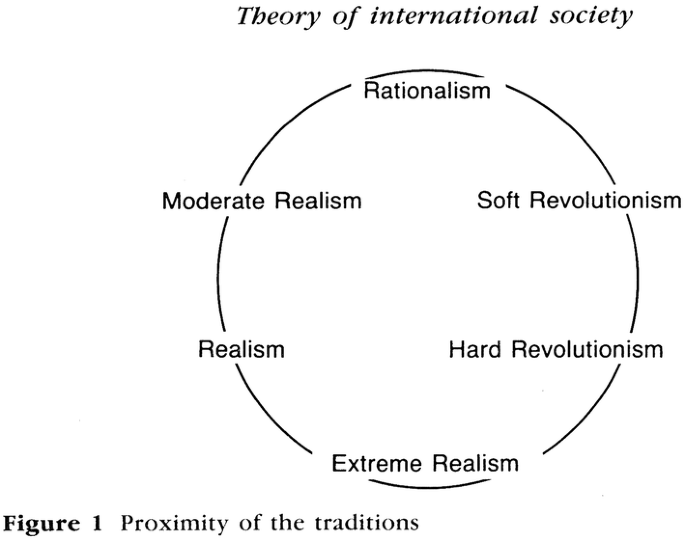
Further information between global responsibility, national security has been expounded in the

fourth section. Some aspects explained here. Section 3 primarily deals with how & why national interest is given importance over the global responsibility of a nation. The thought of maintaining territorial integrity, sovereignty is of extreme importance in all schools of thought ranging from realism, liberalism to English school and any other school of thought, the only difference point in these schools of thought is how much importance should be given to issues ofterritorial integrity, sovereignty, fighting fundamentalism while framing the international relation policy of a nation be given over other issues, for example: a realist will argue that the national interest is supreme, a liberalist will argue that first importance should be given to human values over territorial integrity, fighting fundamentalism but the person will say both are important.

The respecting of sovereignty &  existence of a country is considered at least on the face value by nations as it’s acts as a deterrent which can help to prevent war though there can be territorial disputes, hence we see most of the countries recognising the existence of each other (keeping aside the role of intelligence agencies, specific lobbies, violent proxy actors propped up by enemy countries in this issue who pose a threat to security apparatus of the concerned nation).

Similarly, every country also recognises the right of one country to have military & a proper security apparatus however the relation between the 2 nations may be. (Sood, The Unending Game)

Despite the changes in world order, there are some components of national interest which never change which again depends on the internal as well the historical issues of a country which nations never want to leave. For example:Majority of Indian policy makers view RCEP (Regional Comprehensive Economic Partnership) as something which infringes on national sovereignty as it led to the disappearance of Indian industries which led to India’s colonialisation. The RCEP was being viewed as an issue which was finishing off the manufacturing base of multiple industries which made India to withdraw from the agreement. The withdrawal of India from RCEP was accepted by persons across political ideologies &the common people at large with the Minister of commerce & trade Shri.Piyush Goyal stating that India’s RCEP decision was not last minute & it was imperative for India to leave the agreement for securing the economic interests.(Shukla, India’s trade protectionism & low productivity vicious cycle, Ideas for India, Research articles)

This national interest which is itself based on multiple issues determines the global responsibility of a country which is directly proportional to the stance of varying degrees of national interest given importance more specifically territorial integrity is adopted by policymakers.

National interest goes hand in hand with global responsibility of a country and both are important for the development of trade, maintenance of peace &; security, recognising sovereignty of each other. (Sumanth Bhattacharya, Impact of national interest & global responsibility on international order)

The term Global responsibility is a frequently used term when it comes to the international relations. Global responsibility of a country when spoken is applicable to individualistic nations.

The global responsibility of states is usually the core issue of the international relations which has given rise to different schools of thought such as feminism, green theory and is extremely dynamic in nature as social science issues,societal issues keep on changing from time to time.

Global responsibility in terms of international law is the duty to respond in case of violation of laws. (Baripedia). Global responsibility of a nation is directly proportional to the national issues concerned. For example: The building of Buddha Circuit in Uttar Pradesh is directly proportional to the rise of Buddhism in North east India, Bihar which serves as an electoral votebank for multiple political parties, this has led to people from different parts of world coming & visiting the circuit which has changed India’s position of global Buddhism very significantly.

Global responsibility also means the nation states tries to follow a set of responsibilities which has been set up in the world by either moral values or some shared values which are cherished by world. The liberalists in the international relations believe that it’s the duty of the nation to stay & fulfil some of their responsibilities towards the globe. The global responsibility of nations in the liberalist world view also includes the utmost respect towards human rights, climate issues, feminism among many other agendas which cannot be maintained within a geographical boundary. Hence the adoption of agendas like Climate change in the COP-26 summit is the arrival of green theory on the world stage as it has virtually made it a compulsion for nation states to save environment and keep it as a prominent topic of discussion while formulating international relations framework. (Introduction to InternationalRelations & Diplomacy 87,88,40,50: United nations website).

The best example when states showed their global responsibility from an realist scholar view point was behind the formation of the United Nations Committee of fighting terrorism, which was also based on global responsibility to maintain peace in world. However this arrangement was based looking into the realist

Another point of view who wanted to keep an international enforcement agency which agrees to the common point of maintaining peace & action against terrorism is taken accordingly hence pushing states to adopt some aspects which fight terrorism in an uniform manner which depends upon states.(UN Geneva convention)

However, if the opinion of a few select scholars mainly from the English school of thinking is to be considered there cannot be fixed set of values which can be achieved upon as the international “system” is always in a constant state of change &  anarchy where one cannot come at a genuine conclusion. The identification and solutions to global problems is at the forefront of International Relations and Diplomacy theory, the common problems of humanity give different versions of global responsibility and which responsibility should be prioritized is also a question as well as a bone of contention among scholars which will ultimately lead to a different definition of global responsibilities, hence what is a global responsibility is always contentious and a hotly debated topic. (Introduction to International Relations & Diplomacy 22,23,24,2526,33,40,44,45,46,47,48,50,87,88,93).

Therefore since there is no single definition of global responsibility of a nation & when it is varying from country to country it depends on what is the nation’s national interest first which will impact its global responsibility in a multi-dimensional way. Similarly in the world as of now there has been no sacred elements of global responsibility defined for a country. For example: A feminist will define global responsibility of a nation as one which takes women rights into the top account in an international relations perspective, a realist will bat for national security as the first point of an international relations policy. (Introduction to International Relations & Diplomacy 87,88,40,50)

However, given the diversity of global challenges the world faces its extremely pragmatic to conclude that there will be a set of definition that will apply to global responsibility, also in the current time where the world is increasingly polarised between ideologies there is no single component of global responsibility that a country will accept willingly or unwillingly. Hence there is no set of defined global responsibility in world order that one has to follow which makes states to follow their own version of global responsibility which comes out of their national interest.

Hence global responsibility of a country is that issue which is extremely debatable between nations. How a country views its global responsibility largely from the lens of their nation circumstances which frames as states believe if their nation is not existent then how can it fulfill its global responsibility, hence there is always national interest which is given importance global responsibility & subsequently its attitude towards world at large. For example: India’s inability to convert the short term gain achieved in the India Sri Lanka Accord was also an indicator on which issues did Indian policymakers make big mistakes whose impact was seen in the future on India’s responsibility towards Sri Lanka in 1990’s & the early 2000’s. This also determined India’s policy towards the island nation which further impacted its global responsibility. (Stuenkel, India: the next superpower?: Indias nationalinterests and diplomatic activism: towards global leadership?,LSE online.)

4. Examples

(a)India banned the export of rice varieties except for Basmati rice in the months which was done with effect from 9 September 2022 which was done to control the rates of food inflation & WPI (Wholesale Price Index) which is necessary for the maintaining economic security. This also means that there will be a food shortage esp. of rice in countries of middle east hence we have seen how India has adopted national interest of economic security over global responsibility. (Mishra,Livemint)

(b) India gave a strong rebuttal to the USA led human rights panels on its biased reports on Jammu Kashmir. This led to a confrontation between the Government of India & some politicians of USA who said India has abandoned its duty towards human rights. As an Indian first, many Indian social media users gave strong worded replies & called out their hypocrisy on various platforms. This also means when there is an issue related to territorial integrity & people not having any locus standi comment then the political parties unite against such a person.

(c) When USA threw & detained 100’s of accused terrorists from Afghanistan into Guantanamo Bay, it was accused of committing serious human rights violation &  when the UN team wanted to investigate the same they were not allowed in as it was viewed as interference into another country’s internal affairs. (Frankfurter, ACLU)

5.Research methodology used:

The research paper is titled as “National Interest vs Global responsibility: what should a country choose”. The objective of the paper is to understand 2 things, which are understanding how national interest impacts global responsibility & why in the world currently the nations are likely to follow their national interest while framing policy of international relations. The research methodology adopted by the researcher is secondary data. Ontology method has been used. The data has been collected from various sources from research papers, journals, newspapers like the Hindu & new Indian to further make the debate more comprehensive. The data analysis was done using the concept of phenomenology & linking the data which is taught in economics. The data pertaining is analysed using econometrics & qualitative economics study.

6. Conclusion:

The conclusion that we can infer from the entire literature is 3 fold one is, national interest determines the international relation policy & global responsibility, diplomatic policy which defines the global responsibility, two nations have historically adopted national interest over global responsibility & have not shied away to prefer national interest over global responsibility in multiple cases, third a nation should adopt national interest over global responsibility.Hence a country while framing international relations policy framework should undoubtedly adopt national interest over global responsibility.

7. References: 

(Introduction to International Relations & Diplomacy : Concepts)

(Krotz)

 (Markelu)

(Masters)

(Bhattacharya)

(Mishra)

(‘We too have views about Human Rights issues in the United States’: How

Dr S Jaishankar hit back on USA’s criticism of India)

(Sood)

(Jaishankar)

(Stunekel)

(Shukla)

(UNO )

Thursday, 30 March 2023

Power crisis in South africa:An Overview

Introduction: South Africa is a country located in the southern tip of the African continent, its coastline stretches about 2850 kilometres, from the desert border with Namibia & maritime border with Madagascar. South Africa is also one of the largest economies of Africa along with being a part of BRICS grouping which is meant for developing economies, its proximity to global trade routes make it as an attractive investment option, however in the year of 2023, the emerging economy of south africa has been stuck with frequent power cuts & is close to power crisis in the country.South Africa mainstay for economy are sectors of: mining, transport, energy, manufacturing, tourism & agriculture. South Africa contributes up to 3.5% of world’s coal resources , the country’s production is about 3.3% of world’s annual production & it exports about 6% of world’s total coal exports. Needless to say, coal & power sector is the major engine for South African economic growth story. 

 Explanation: Most of these sectors are heavily dependent on power sector for their day to day functioning, in fact, South Africa’s growth rate of nominal GDP YoY is 2.0% down from 4.9% a year before it for which experts are also blaming the power crisis along with reasons like: slowdown in agriculture and global inflation cues. The energy crisis of south africa stems from coal crisis & also at a larger level where due to global disruption of supply chains, lack of proper alternatives to energy generation has meant that the pride country’s coal production has fallen steeply which has led to a lot of load shedding & subsequent, frequent shutting down of electricity in the country. The recent power crisis has its origins listed during the coronavirus period, when there was low demand for electricity. The sudden high demand on electricity meant that the estimation of SA Power generation firms was caught on the blindspot which led to the power crisis in year 2022. The year 2022 saw that the number of hours without power in South Africa increased from 1000 hours in 2021 to almost 1959 hours in 2022, and the year 2022 has been one of the most stressful years for South African electricity department as it is facing the worst crisis after almost about 10 years when in the year 2008, the overall hours of electricity shutdown was estimated to be around 900 hours which was considered a lot during those days, however with the tremendous growth of economy afterwards, it has led to pressure on electricity generation which has led to this crisis in making today. 
The energy crisis was huge even before the Russia-Ukraine war started on 23 February, 2022, even in the year of 2021 where its coal production fell steeply by the state power generation firms has been more or less stagnant since the coronavirus pandemic, About 85% of South Africa’s electricity is produced by the coal/thermal power stations which have been facing problems like lack of proper capital availability, ageing(ideally any thermal power plant should be renovated after surpassing the operational age of 25 years, which has not been done in South Africa so far), along with the issue of theft of coal whose instances have increased in the coal abundant regions of Northern south africa which has left the thermal power plants unprepared if we consider the views of experts. ESKOM average tariff prices for power in industrial areas has shot up from 43pc in 2013 to about 59 pc in 2021 which is a rise of almost about 50% in a comparatively short span of 10 years, which means that the demand is outrunning the supply of electricity.
The total energy sold by ESKOM to Industrial sector has also fallen from 75,000 units in 2004/05 to about 46,000 units in the current fiscal year. The South African Reserve Bank has estimated that the blackouts would cost the economy up to 51 million$ per day. The situation was so grave that the president of South African government even issued an investigation into Escom(which is south africa’s major coal company), whose revenue performance has been underwhelming in the last 2 years which has lost millions of dollars in irregular & sporadic spending along with structural issues due to covid crisis & the energy security issues which have plagued South African economy, which has prompted the government, industry experts to even think of diversification of south african energy streams in a phased manner, where solar energy seems to be the best possible alternative as the solar photovoltaic cells prices have fallen from $100 in 1975 to almost about 0.27$ in the year 2021, which means that its an opportunity for firms to invest in this sector which will have low production costs & even have a decent amount of share in the South African energy market by the next few years. The lithium charges in south africa is also one of the cheapest in the world. The solar energy ecosystem is available for which the biggest testimony is that it produces more solar energy than its BRICS counterparts of Brazil & India. 

Pingali Venkayya - An UnderAppreciated Genius Who Gave India Its Identity

AI Generated Image In, 2021 before the Indian Independence day celebrations PM Narendra Modi has launched the unique campaign, titled “ Har ...