Thursday, 30 March 2023
Power crisis in South africa:An Overview
Tuesday, 14 March 2023
India & G-20 Presidency: Multilateralism & Inclusive development
| G20 logo: Credits: Economic Times |
The year 2023 will be historic in multiple aspects from India's viewpoint, some of the big things slated for the year are India's chances of lifting a cricket world cup after 12 years,76th independence year among many other achievements as well as opportunities, however the year is most important from a foreign policy point of view as India would be conducting the G-20 meet in the year 2023. G-20 refers to the group of 20 most economically powerful nations who have a contribution of almost 70% to the world's GDP. The G-20 presidency is also an opportunity for rising countries like India to place its viewpoints on important issues at a global level. The G-20 is the premier forum for international economic cooperation. It plays an important role in shaping & strengthening global architecture & governance on major economic issues.India at present, holds the presidency which will last till November 2023.
G-20 is also an unique setup which comprises of startegically important countries which hold sway over multiple regions in the world, which makes G-20 the ideal forum to discuss issues related to issues affecting humanity & the world at large. Since, 20 most important countries of the world which hold sway will be there, its natural that every country will be having their own comparitive advantages, which makes it as an ideal forum for multilateralism. The multilateralism in G-20 summit gives an opportunity to India, which makes India's importance as the centripetal force in advancing multilateralism.
The G-20 presidency is an opportunity for India to present a vision for the inclusive development of the world's economy, as was stated by the honourable PM of India, Shri. Narendra Modi in his remarks at the Global South Conference which pressed for actions on issues concerning the world at large. Its no doubt that in todays world which is globalizing at a quick pace along with fast paced economic growth inclusive development cannot be possible in a bilateral or unilateral system, it requires the efforts of many nation states so that the ultimate goal is reached in a way which is of fulfilling the sustainable development goals among a host of goals which will help make the world a better place.
An in depth study in the history of multilateralism which became more prominent after 1990's shows us that with economic liberalization in trade policies it led to multilateralism which has led to a changed inclusive development which has seen the world's GDP grow by leaps & bounds, along with greater cooperation between countries not ideologically inclined to each other, one of the best examples can be the MDG's where polar opposite ideological nations of China & USA, declared their unanimous support along with taking steps to actually resolve those issues, these were later formulated into SDG's, not only development goals but with evolution of multilateralism over the years, there has been more economic democracy where the economy moves towards a demand side economy implying the common consumer has got more power to decide which products he/she wants to buy, this economic democracy is also an equally important objective of G-20 which would be discussed if not resolved in the G-20 summit to be conducted in India.
The view of multilateralism from an inclusive development lens is important because it allows multiple counterbalances if any one country tries to bully the rest of the group for fulfilling their own demands, along with having multiple counterbalances, it gives rise to a healthy democratic environment in the world, where the countries will come on a common table to negotiate best according to their national interest which will by & large ensure that the voices of downtrodden also reach them. This is what is precisely expected from the upcoming G-20 summit in India, which since the days of Nehruvian foreign policy to Narendra Modi's foreign policy has always emphasized on being the voice of those countries who have been not been taken seriously in the foreign policy discourse.
Given, India is a major economic superpower now with many natural as well as policy factors working in favour of India, the G-20 summit in India is an ideal platform for India to showcase its strength of economic democracy, civilizational values, cultural ethos to the world which will pave way for multilateralism in the world, which will lead to inclusive development in the entire world.
Sunday, 12 February 2023
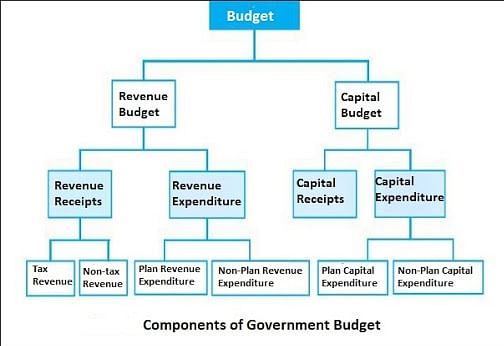
A short in depth mathematical overview of Central government expenditures: Union Budget 2023
![]() |
| Photo from prepp by collegdunia |
A. Introduction:
The budget is an annual financial statement of the government of India which details the reciepts & expenditures by the government of India in a very detailed manner. The union budget for the financial year 24 was announced on 1 Februrary 2023 with a vision for amritkaal
This year budget was unique for many aspects one among them being that this was the last full time budget of this term of the Narendra Modi government. The second unique issue was of rising the Capital expenditure by a whopping 33%. Usually in the budgets the expenditure part is always dealt with a lot of focus to ensure it as a confidence building measure with the masses at a time.
B. Basic definitions: In economics, there are generally 2 kinds of expenditure, one is revenue expenditure is the part of the budget which does not lead to creation of assets in short or long term. It may create assets indirectly but it does not create assets directly. Best examples can be of pensions, salaries to employees, welfare schemes,defence budget etc.
Though these expenses can create social welfare but they do not create direct capital value in the economy.The other kind is of capital expenditure which should either result in creation of assets or in reduction of liabilities for the government. It has a direct affect on the total fiscal deficit as well.
C. Prominent verticals analysis:
Pensions expenditure: Pensions are generally given to the people who have retired from the service. In India, currently the national pension system (NPS) is in force in India. In this section we will talk about the pensions for the central government employees. As per the Budgeted estimates of the FY 24, the expenditure on pensions is projected to be upto 2,34,359 crore which is a rise by 13% from the last year budgeted estimates which was pegged to be 2,07,132 crore. The rise in the pensions expenditure by the government is due to the fact that the revised estimates of the FY23 defeated the Budgeted estimates by approximately 43,000 crore, hence the rise in the pensions have occured. The number of employees enrolled in the EPFO system will also consider a good chunk of the central government employees who have recently enrolled into the system, hence its a highly plausible that with increased formalisation of economy, the pension bill of the government will also likely surge. The government of India has to also keep a close button on the expenditure on pensions as it can cause the government of India to reduce its capital, 2 solutions can be of increasing revenue through direct sources & implementing NPS at a breakneck pace.
PM KISAN Scheme: The PM Kisan Samman Nidhi which gives farmers Rs. 6000 per year as basic minimum support. Its a central government funded scheme. Its operational in most of the states in India.It became operational from 1 December 2018, under the scheme, e-KYC is compulsory and every farmer has to register himself with it. The PM Kisan Samman Nidhi has been allocated funds worth 60000 crore which is down by 8000 crore from the budgeted estimates of the Fiscal year 2023, the possible reason can be that the Revised estimates of the FY 23 was at exact 60000 crore, which means that upto 10 cr farmers would be given the benefits of the same. However, with general elections scheduled for 2024, we may see more states registering more farmers for the PM-Kisan scheme meaning the revised estimates can very well defeat the budgeted estimates for this fiscal year.
Development of North east: The development of north east is of top priority for the government of India , the 8 states of north-east India(Sikkim,Arunachal Pradesh, Assam, Meghalaya,Mizoram, Manipur,Nagaland, Tripura) which are startegically important for India's national security along with being blessed with a lot of natural resources which can be the engine for India's economic growth in the future. The funds allocated for the development of north east has been approximately about 5900 cr this budget, this is a percentage rise of almost about 110.42% which is probably the highest budget hike probably in the entire budget. The government of India would be seeing to complete important projects like PM-DevINE scheme out of which mostly is for capital expenditure which is almost of 70% of the capital outlay this year,the allocation of tribal sub plan has been enhaced to 1690 cr. However, the entire development of north east should also happen in a holistic manner and it would be good if modern infrastructure like Vande Bharat trains are also provided.Some, routes for Vande Bharat express can be from Dibrugarh-Siliguri, Agartala-Tinsukia to name a few. The infrastructure development in north east will strengthen India's economy as a whole.
Education: Education is the backbone for the economic development in any country. The education budget of India is pegged to be at 1,12,889 crore which is approximately a percentage rise of 8.257% as compared to the previous year education budget which was about 1,04,278 crore in the FY23. Some important projects enhanced to the education sector this year has been of issues like the promotion of research in India, enhancement of services of national digital library, building of 157 nursing colleges along with the existent medical colleges, along with building of IIT's, IIM's in different cities. Cities where IIT can be started are as follows: Warangal, Davangere, Surathkal, Kozhikode, Coimbatore,Kangra, Udhampur,Darjeeling,Shillong, Lucknow, Pune, Vishakapatnam, Imphal to name a few. Similarly IIM's can be started in: Mysore, Trivandrum, Darjeeling, Agartala, Jaipur,Karimnagar, Nagpur,Shimla, Mehsana, Barmer,Anantnag. The IMU's can also be started in multiple cities along the coast line where the Indian coast guard has been posted so that a proper integration between maritime security & development of blue economy takes place, some of the places can be: Vizag, Paradwip, Howrah,Shillong,Thottukudi, Vizhingam, Jamnagar, Mumbai, Karwar. Some other important schemes can be launched is of a shikshak samman nidhi to remove the underpayment of the teachers.
Transport: The transport-logistics sector has been the most critical sector for the Indian economy from the past few years, with many big ticket projects coming up recently like the Samruddhi Mahamarg, Delhi-Mumbai expressway to name a few. The transport sector has seen its budgeted expenditure rise by a whopping 46.94% to the present figure of 5 lakh 17 thousand crore which is almost 4.5 times the budget allocated to the home ministry.Though this expenditure can be considered as a capital expenditure but its an expenditure which will bring a lot of qualitative change in the lives of people in India, majority of whom travel using roadways.
Conclusion:
The blog focused only on a few specifics because these are the issues which form the basics of the economic developmement in a sustainable manner.
Wednesday, 1 February 2023
Reciept status of Government of India: An in depth analysis of Union budget
| Source: geeks for geeks, these are the 7 basic objectives of government budget in India |
A. Revenue Reciepts:
- Under the same, the Income Tax reciepts is expected to rise by 28% if we see it from the lens of budgeted estimates of 2022-23, in the sub sections, the same ratios have been taken into consideration as the data of revised estimates for FY 24 is not published so far. This rise is optimistic because of the difference between RE-BE of FY 24& FY 23 was almost of 11 lakh cr.
- The corporation tax reciepts to rise from 7,20,000 cr(BE 2022-23) to 922675 cr(BE 2023-24) which is a huge rise of almost by 28.149% which is almost similar with that of the income tax collections, the optimism is due to the revised estimates of FY 23 defeating the BE of 23 by almost 10 lakh crore.
- The fact that there is not a lot of difference between the budgeted estimates of corporate tax & income tax raises a lot of eyebrows among the practioners of public finance in general as the number of persons giving Income Tax has not increased in the country in the past many years, however the number shows that we may be seeing a future where the role of corporate tax & income tax sees more or less equal amount of growth in the future. This can be collaborated by the fact that both the corporate tax & income tax had contributed 15% each in the overall reciepts of India in the FY 2023.
- This also means that the role of GST in India is going to increase significantly, as of FY 2023 the GST contribution to the reciepts of the government was 17%, there is a rise in the budgeted estimates of the FY23 & FY 24 by upto 24%, this optimism is also due to the reason that the GST collections in FY 23 defeated the BE by a huge number of almost 7 lakh crore.
- As students of economics, we must note that the, figures of GST & Corporate tax is an indicator of corporate health & a parameter of success of ease of doing business, because ease of doing business & profits can only be risen when there is an environment conducive for the same.
- The next component of direct taxation is that of the custom duties, this is one sector of the direct/indirect taxation where the government seems to either underestimate its performance or be pessimistic about it underperforming with respect to the other sources of taxation. The reason behind this being that the percentage difference between the budgeted estimates of FY 23 & FY 24 is very meagre rise of only about 9%, the reason behind this pessimism related to customs can be due to fact of Revised estimates of 2022-23 was under the Budgeted estimates by almost about 3000 cr while other direct taxes revised estimates outperformed their budgeted estimates by huge margins. The contribution of customs to the revenue reciepts stands at 4%.
- Reciepts of union territories: The government has significantly reduced its outlook towards the reciepts of union territories in this year budget, it has been a fall of about 494 crore rupees from the difference of BE 23 & BE 24. This component is for those Union territories who do not havea legislature like: Andaman & Nicobar Islands, Lakshwadeep Islands, Dadra Nagar Haveli, Daman-Diu, Ladakh. However with the infinite development potential available in these states its highly possible that the Revised estimates of 2024 will defeat the budgeted estimates of 2024.
- External grants: Grants are basically the help provided by the foreign governments/multilateral institutions for the development of India. The external grants have been projected to rise from BE 2022 which was about 620 crore to about BE 2023 which is about 2135 crore , this rise in terms of percentage is of about 70.69%, the reason behind this rise is hidden in data of RE of fy 23 which outperformed its BE by about 2000 crore. The reasons being the borrowings of multiple governments to fulfill the Sustainable developmental goals.
- Loan Recovery: Recovery of loans have BE 2022-23 14291 cr will fall to BE 2023-24 to 23,000 cr, implying that the loan recovery process will be slow. However it also implies that liability creation by the government will be less this year.
- This fall between the BE of 2022-23 & BE of 2023-24 in aspect also shows that there is a requirement for the ministries to ensure that the interests recovery take place properly.This is a rise by almost 60%,however, point to be noted that the revised estimates of 2022-23 defeated the budgeted estimates by almost 9 lakh cr which indicates that the government recovery methods were on the right path, hence financial analysts, believe that the government can trump its BE this year with the same intensity.
- Borrowings & Other liabilities: Borrowings is the part of capital reciept which is of the utmost interest for the economists. Borrowings show the resilience as well as the strength of the public tax collection methods as well as the success of implementation of big cash projects, for the reason, usually borrowings are done to help the government complete its projects, borrowings is also done to ensure that the pace of infrastructure growth does not get hampered, it is used to fund budget deficit(when budget expenditures exceeds the budgeted reciepts).
- The BE of 2022-23 was pegged at 1661196 cr whereas this year BE of 2023-24 is pegged at 1786816 cr. This rise between the BE is almost of 7.6% which shows that the government of India is interested in completed its big ticket projects through the ways of borrowings. There is less chance of revised estimates crossing the Budgeted estimates of FY24 since, the revised estimates of FY 23 crossed the budgeted part only by 2.3%, which shows that the government of India is heavily focusing on maintaing the fiscal discipline in the economy.
Monday, 16 January 2023
From R-Day celebration to gaining a foothold in Africa-European nations:Importance of Al Sisi's visit to India.
![]() |
| Source: istockphoto.com. Illustration of geopolitics. Geopolitics is a long game of chess. |
Introduction:
January 26, 2023 will be an important day for India in many aspects, on one hand it strengthens resolve of India’s commitment to its constitutional values of plurality, equality, liberty, freedom & enhancing its civilizational values over a period of time on the other hand it will mark a momentous occasion in the diplomatic history of India when the President of Egypt, Shri. Abdel-Fateh Al Sisi will be the chief guest for witnessing the grandeur of the Republic Day celebrations on the now renamed Kartavya Path looked in the heart of India, New Delhi.
Basics:
Diplomacy is seen as the presence of a structured communication system at a bilateral as well as at a multilateral level. A closer look at India’s chief guests for the last few years shows India’s commitment to properly use India’s incredible soft power to achieving diplomatic success either in the short run or long run. For example: In, 2018, the Narendra Modi government invited the heads of ASEAN countries namely Philippines, Laos, Cambodia, Myanmar, Indonesia, Malaysia,Thailand, Singapore, Vietnam & Brunei, since 2018 the relations between India-ASEAN have improved significantly with the trade between both the countries in the months between the 2 powerful blocs increasing from US$ 81.3 billion to almost US$ 274.50 billion according to data from newspapers & the ministry of commerce-trade, India is also looking at the ASEAN nations as a potential market for the defence goods manufactured in India along with securing India's startegic, security interests through SAGAR mission & attracting investments from ASEAN nations. The steps by India is also yielding positive results with Phillipinnes becoming first buyer of India's brahmos missile, Singapore becoming one of India's largest foreign investor & Indonesia president Jack Widodo passing the presidency to India for the important G-20 summit.
India-Egypt relations:
India-Egypt are the world’s 2 oldest surviving civilizations, while one is famous for its temples,cultural plurality the other is known for its pyramids, delicious food which act as important symbols for soft diplomacy in the world. Even during the ancient times, India-Egypt used to trade in abundance with multiple studies showing evidence of trade of commodities like lapis lazuli & food grains to name a few. After India's independence India-Egypt relations continued to blossom on all fronts even in the face of extreme changes in the political setups of both countries (Arab Spring in Egypt & Emergency in India can be considered as prominent examples) with India's export to Egypt rising to 3,473.92 billion$ in 2021-22 from a figure of 2,392.34 billion$ in 2017-18.
India mainly exports iron & steel, light vehicles,cotton yarn & imports mineral oil, petroleum products, fertilizers to name a few. It means that the policies of textile ministry of India is of significant importance for international trade with Egypt & the policies related to fertilizers, energy demand is of significant importance for India’s imports from Egypt.
Startegic industries:
With the scheme of One Nation-One Fertilizer scheme coming into force in India from late 2021 along with India’s rising population, India’s rising PCI, high agricultural growth rate which is forecasted to be above 3% for the next few years, India’s fertilizer demand is expected to rise as more farmers will be getting access to fertilizers at subsidized prices from the general market & applying simple demand-supply law, it will create a lot of stress on India’s existing fertilizer PSUs like RCF, NFL who are also looking to improve their production capabilities in such a situation the market is open for international players at least for a short period of time which will allow them to find a foothold in India’s fertilizer market as it can create a short term supply chain crunch for fertilizer industry, fertilizer industry is also important for India’s agricultural growth as fertilizer contributes to the significant amount of agricultural inputs in India, in such a situation at least for the very short run, India would like to import more fertilizers from countries & given Egypt's production capabilities, till the time India’s private players & PSUs ramp up the production capabilities, importing fertilizers from Egypt would be a good deal for Indian farmers. Also since, India is a market of more than 10 million farmers, it makes Egypt to seriously consider ramping up fertilizer exports to India as its too big a market to be ignored, when this will happen, India’s fertilizer industry will become more competitive & farmers will get fertilizers at a very cheap rate which is important for the agricultural development of India.
The second, important aspect is of, Egypt’s geographical location which is located near the Suez Canal from where a lot of international trade takes place, the route’s importance can be understood from the fact that 12% of the world trade happens through the Suez Canal which helps in boosting the Egyptian economy as Egypt can levy taxes along with development of its ports sector which gives Egypt a strategic leverage among many African countries, Egypt will be expecting India to help in the development of its ports along the Suez canal in exchange for India expanding its exports from the canal to the per capita wise rich European, Middle eastern countries & the western economies in general. India’s export bill touched almost US$34.37 billion in the month of October 2022, hence Abdel Fateh Al Sisi’s visit to India becomes more important & given India’s rising economic stature and retaining its position of one of the fastest rising economies of the world, its an offer which will lead to mutual benefit for both the nations, the law of absolute & comparative advantage given by David Ricardo holds true in this case. This will lead India to boost its exports of its products like electronics, electrical goods, textiles, port technologies to Egypt which will help India to achieve a quick rate of growth, it would also allow Western nations access to India's semiconductor industry in the future once the Vedanta plant in Gujarat's Ahmedabad is ready for operations.
The third aspect where the policymakers of both the nations would like to concentrate is improving the investment portfolios in both the countries, as of 2022, India invests US$ 3.15 billion ranging from industries like garments, packaging firms, chemicals, F&O whereas Egypt invests US$ 37 billion in India with investments in industries like coatings, electric meters to name a few. India- Egypt would like to boost this mutual investment portfolio & with India’s Oil & Gas Minister Shri. Hardip Singh Puri indicating that India will be seeing an upward trend in the investments in oil sector to 58 billion$, it is widely expected that Egypt would also be investing for the development of oil & gas industry in India which would reduce India’s dependence on other nations in the oil sector, it would also create multiple employment opportunities for India's youth in the oil & gas sector, India would also look forward to invest in Egypt’s renewable energy sector, textile, logistics & tourism sector as Egypt looks to diversify its economy to safeguard itself from geopolitical uncertainties of the world along with climate change factor due to Egypt can be one of the first countries to get affected, as was suggested by the African Development Bank in its annual report published in the year 2022.
Advantages to India:
1. Filip to Atmanirbhar Bharat project for agriculture sector specifically.
2. Boost to oil & gas sector of India
3. Boost to ports development of India
4. Making fertilizer industry more competitive
5. India becoming one of major foreign investors in the world.
6. Direct access to markets of the developed world.
Advantages to Egypt:
1. Boost to Egypts inflow of FDI
2. Can get help in resolving Suez Canal & Nile Valley dispute with its neighbours.
3. Economic diversification of Egypt
Suggestions from my side to improve Indias penetration in Africa:
Given the economic conditions of both the nations it becomes imperative for India & Egypt to think about converting this important visit by Abdel Fatah Al Sisi for long term gains in which both the countries can benefit, some steps that can be taken from Indian side can be as follows:
A. Increasing India's pledging for the development of African nations, industries India can concentrate should be related to infrastructure project funding through NBFC's,allowing Indian PSU's to open more foreign branches in the North African countries which lack in financial literacy, inclusion. In poor countries like those in Africa such as Senegal, microfinancing schemes by India's big companies like Mannapuram Finance, Aditya Birla Capital, L&T Financial Holdings can be a gamechanger. DTAA agreements along with reduction of CRR-SLR for foreign investments by NBFC's can be seriously thought about by the RBI & Government of India. If required the idea of AADHAR which is digital identity can be developed by India in a guiding role with the African governments.
B. India can increase its investments in the education & health sector, this will allow African countries to come out of serious problems like malnourishment, AIDS control, TB control in Africa which will lead to India winning the hearts of African common people.This will lead to a chain of events which would be beneficial for India in the long run. Special incentives like DTAA agreements with African Union & Egypt especially for India's edtech sector firms can be provided & the expansion of Indian edtech firms in African nations should be startegic in nature, first investments can be done in economically well off nations like Morocco,Egypt, Algeria,South Africa, Zimbabwe which would help India in engineering the psychology of quick sustainable development among other African nations. The cost of course for graduation in STEM courses in India can be provided at a discount of 3-5% in central government aided colleges.
C. A strong focus by Government of India on the agricultural growth of African countries can be focused upon for a period of 6 years, where India's agricultural exports to select african nations like Togo, Cape Verde, Libya,Senegal,Namibia,Mozambique,Kenya,Mali,Burkina Faso,Ghana,Angola & Nigeria at ration or cheap rates can be considered. Along with providing food, a serious boost to India's Food Manufacturing Industries can be given to encourage them to set up manufacturing units where they can be given tax rebates in India along with DTAA with these nations can be seriously considered. The custom import duties on certain products produced by these nations in agriculture can be reduced in India & given India's domestic demand the African countries would like to have more trade in agricultural products with India. The other step can be helping the African countries in sustainable agricultural practices, modern drip irrigation schemes like PM-Kusum Yojana can be extended to the African nations where farmers are provided solar hand pumps at a cheap cost, along with various good schemes from India.
Advantages for India from these suggestions:
i. Growth in foreign exports
ii. Growth in asset profile of Indian banks which will help them give loans to producers in India this will boost India's growth in the long run.
iii. Boost to India's education sector.
iv. Boost in agricultural production of India. Food processing industries can also grow which will help in generating a food surplus in India.
v. Boost to India's food producing industries.
vi. Boost to India's cybersecurity setup.
vii. India getting a very long term market.
viii. counterweight to China.
Advantages for Africa from these suggestions:
i. Rise in financial inclusion.
ii. Rise in agricultural production for Africa.
iii. Rise in educational levels for Africa.
iv. Rise in health facilities in Africa.
v. As India is not an exploitative power it will lead to sustainable growth of Africa.
vi. Fast economic growth for Africa also achieving SDG's.
vii. Infrastructure development in Africa will also occur.
Conclusion:
The visit of Abdel-Fatah-al Sisi will induce sector wise economic growth in India & Egypt which makes this Republic day celebrations interesting for watchers of diplomacy around the world as it can improve India’s outreach & winning the hearts of African countries
To conclude, India-Africa relations can go to a whole new level in the next few years. The government of India should reinnovate, relook its policies from time to time in order to create a vibrant foreign policy for India. In India's outreach to African nations we must not remove our focus from making India as the world's most sustainable economy.
Sources:
Tuesday, 1 November 2022
Rejuevnating India's Cultural Economy: Special focus on Temples: Important piece in Atmanirbhar Bharat
![]() |
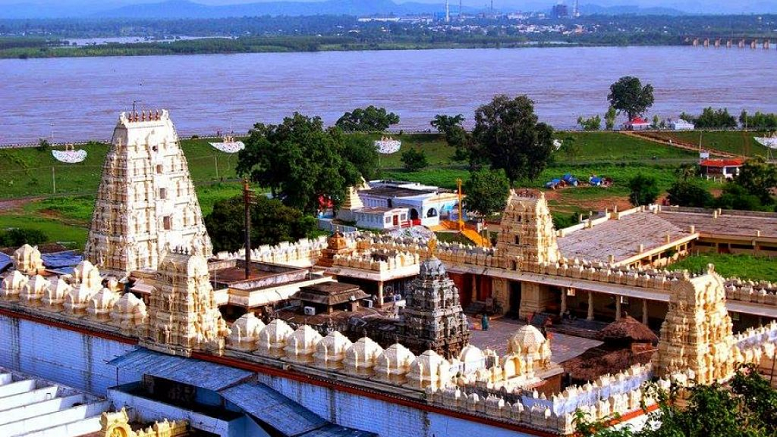
| The majestic Bhadrachalam temple.credits: Hindu post.in |
Introduction:
An economy is a system where people earn livelihood which they spend/save for their upliftment in all forms. This is the most simplified definition of an economy. Cultural economy more specifically temple economy is very important in this regard.Cultural economy means when economic system originates using the economy of a country.
Recent happenings:
On 13 December 2021 Prime Minister Modi in the majestic city of Varanasi inaugrated the grand Kashi Vishwanath corridor. The Kashi Vishwanath corridor,some of the salient features of the Kashi Vishwanath corridor is that the gateways were built using stones by traditional craftsmanship.Temple complex will host 27 structures including prayer halls, museum, rest areas, guest house, food court, security, and information zones. The kashi vishwanath coridor is expected to boost the religious & spiritual tourism,local economy in Varanasi.Many Indians believe firmly that temples are places of economic development which will help in creating a strong Atmanirbhar Bharat. This is in line with Prime Minister Shri. Narendra Modiji's vision to reinnovate the temple economy of India, the Prime Minister has taken active steps to reinnovate the temple economy like creation of Ujjain Mahakal Corridor, return of grandeur to Kedarnath dham & making visiting temples & matthams as a social event.
This has created an innumerable impact on the minds of people, who also know about the history of such places & start visiting these places, which in turns helps in the growth of local economy around the region, as the prime minister of the nation is undoubtedly the biggest influencer for people.
Nature of temple economy in India:
For the record, in 2019, before lockdown a record of 17.91 million tourists visited India according to statista. At least a small fraction of tourists would have visited the public art structures in India some of which may be statues,religious structures etc. which are traditionally the main crowd pullers for the tourism sector.Given such kind of tremendous influence that this segment has over the economy it becomes very obvious to discuss some specific aspects of cultural economy like idol sculpting. Even in 2022, a temple city in TN attracted more tourists than Goa & Ayodhya had more than 1 million people visiting before the Ayodhya Deepostav, where almost 17, 00, 000 diyas to welcome the homecoming of Maryada Purshottam Prabhu Sri Rama Chandra on ocaasion of deepawali.
According to a WION Gravitas report by Smt. Palki Sharma Uphadyay.The report highlighted how every country wishes India during the deepawali festival. The SENSEX-NSE also recorded a record high of almost 200 points during the deepwali festive time.
Also temples since time immeorial have always been hubs of economic development. According to a report in TOI+, temples are places where the local handicrafts get a ready made market, the hotels around the region also earn a lot of money from the tourists along with having its own realistic significance which any economics student cannot undermine.
The cultural economy of India is also making a strong presence in digital landscape where we have multiple Youtubers recreating Bhakti Songs in the remembrance of the greatness of deities like Shri ram, ammavaru(shakti spirit), Shri krishna among many more. The digital landscape of cultural economy is also transcending where people are promoting facets of Indian culture, apps, podcasts are also being launched by international organisations along with spirited individuals to promote the gifts of India given to humanity. Many places & cities owe their existence to the ancient temples, shrines found in these regions, this phenomenon is very unique to India, some prominent examples can be of the Kedarnath, Dwaraka, Katra, Mahabalipuram to name a few among a list of at least 100 cities.
The real strength of temple economy:
NSSO report says that the temple economy in India is worth of 2.32% of GDP. Since this temple economy is mainly run by the people of the nation, Bharat which means that the majority of the domestic demand is being run by the citizens of India implying that the temple economy is a place which has less risk but at the same creates employment for lakhs of people from various backgrounds. The report further states that the temple economy is equivalent to 3.02 lakh crore which is equivalent to the recapitalization given by the Government of India to the public sector banks. The NSSO data also points out that Indians do more pilgrimage than any other event, the spending on expenses of religious travel is 2217 per person/day, the cumulative expenditure on the religious trip is slated to be almost Rs.1316 crore per day & annual expenditure on traveling itself is close to 4.74 lakh crore which means one of the most important revenue sources for tourism sector is from the pilgrimage carried out by Indians. The annual expenditure by Indians on pilgrimage travel is almost greater than GDP of many Asian countries combined.
Given our strengths in this segment, it is also important to utilizes these strengths to its fullest potential so that the in built & natural economic system of India is further strengthened.
Benefits & Opportunities:
As discussed above the temple economy of India has an innumerable strength, it will benefit the nation not only in the short run but also in the long run, it will benefit nation in all aspects starting from economy to even the smallest segment of the society to even the digital landscape of the country for that matter. Some positive effects will be that tourism (including domestic & international tourism) will contribute more to the Indian economy and it will come out from the tag of a sector that is very risky to invest, when that tag is removed then it will automatically improve the FDI, Domestic Investment,Portfolio Investments in the tourism sector which will further strengthen the competitiveness of Indian tourism firms in the international arena and will generate employment to lakhs of people. The strength of tourism industry should never be underestimated, remember that tourism industry in the UAE is one of their top contributors to GDP, so when India already has so much tourism potential through its temples it gives an incentive to develop the sector overally. The youTube video attached in the hyperlink is very informative to understand how UAE transformed its economy from oil dependent to a diversified set of sectors which has made their country's economy resilient.
The second opportunity is of the infrastructure development that will take place if proper startegies related to business, management coupled with political will is applied by all governments,public policy thinkers, economics students & private firms to develop it. Many famous temples like the Mata Vaishno Devi Mandir, Shri. Kapleshwari Temple, Shri. Vajreshwari Temple, Namgyal Monastery are located in the hills where infrastructure development is the primary requirement of the people. Infrastructure here refers to both social & physical infrastructure, as any pilgrim in India would like to have their pilgrimage be worth the money that he/she wants, hence infrastructure development can also occur which will satisfy the Big push theory of development given by Rosenstien Rodan.
The third opportunity that will present itself will be of that of wiping out the regional economic imbalances that exist between states or between intra-states(for example, people consider southern Tamil Nadu to be less developed that Northern Tamil Nadu & Rayalaseema is considered to under developed than that of Coastal Andhra) such examples exist in almost every state. This regional economic imbalances should never be underestimated as it can plant fruits to demands of separate states which is disastrous for both states in the long run in a purely economic sense as it would lead to fiscal imbalances in their states, increasing debt to GSDP ratios & not contributing to national output. Though there can be multiple regions of statehood demands ranging from cultural to economic inequality to even issues which play with local sentiment, India's history has shown that state reorganization has been successful in some aspects & not so successful in some aspects.If the regional economic imbalances are not addressed properly then it can sow the seeds of hatred between people of a nation which will further act as a blockade for development.This issue can be sorted if proper development of temples also takes place. Local artisans will also earn a better livelihood & their disposable income will improve, savings will rise & Applying the Harrod-Domar model where savings= investment which will boost the national output & generate labour run employment opportunities in short run.
The fourth opportunity is of improving India's soft power through diplomacy which has been attached in the beggining of this research article.
The fifth opportunity is of improving national unity-integration-cohesion which will make every Indian proud of their roots.Many articles on this issue has been written by many cultural scholars spanning across web portals.
The development of temples will also ensure that those raw materials which are required for the manufacturing of such idols or products required in the temples which will create employment even in those sectors & will also reduce India's BoP.
The sixth opportunity will be of boosting international tourism which will bring lot of NRI remittances, FDI & will strengthen India's forex reserves which will bring the price stability to the nation which will again help in nation's development.
Now to convert these opportunities, there has to be adequate roadmap for which a few steps in this regard can be taken. Some can be:
Suggestions: Roadmap
1. Indian Institute of Languages, AFLU, Amrita University can commission translation of Indian texts like the Vedas, Upanishads, Mahapuranas like Vayu Puran/Skand Puran into all regional scheduled languages according to the eighth schedule of the Indian Constitution which can be kept in specialized Gita Stores in the major temples of India.
2. Every state government or the central government should identify, 7 temples in every state that can be developed keeping the temple as a centrestage, social welfare schemes like Swacch Bharat Abhiyan, Jal Jeevan Mission,PM-Ayushman Bharat Yojana, PM-Jan Dhan Yojana,PM-Kisan Samman Nidhi, PM-Kaushal Vikas Yojana, PM-Kisan Fasal Bima Yojana(if in a rural place), AMRUT(If in a urban/semi urban areas), Startup india scheme, PM-Mudra Yojana, PM-SvaNidhi should be implemented at a breakneck pace first, followed by which facilities like road widening, increasing number of construction of flyovers/bypasses(how it has been in done in Kashi for example)(if possible),proper electrification of the roads leading to the temple,opening of 3/5 star dhabas on the roads leading to temple, administrative blocks of District Magistrate, mini secretariat, defense manufacturing units can also be opened in nearby villages/places to temple ,if possible building of greenfield expressways around those regions(if required), opening of Vedic schools where students according to their age can be given degrees like BA in Vedic studies from state universities & in state government jobs they can be preferred like with 2% reservation etc..heli services from a government owned hotel to somewhere near the 1 km radius of the temple,ropeways can also be started, along with erecting statues/building museums/antique shops where ODOP products or local products can be displayed for people as people especially the youth demography of India, prefers economy+pilgrimage. This scheme can be called as Temple Places Development Scheme. Preferably the temples identified should be in the most backward areas. This will help providing lakhs of employment opportunities to the local populace. Defense manufacturing units can also be opened in such earmarked places.
3. Temples are places where local artisans thrive, the government of India can take a special initiative where under skill mapping, the local products manufactured by the people in the area can be marketed by bringing them under one brand name which can be renamed, opening godowns where cold storage can be done(private firms can be of great help here), opening of places where barcodes are also issued, connecting them using ONDC platform so that they can get their best price & then marketing it in the Gita Bhavans/antique muesums of not only that temple but also in the temples of other states, this will help the local artisans immensely & Will boost their income sources.This will also boost inter state trade.
4. Temple management can also take help of IIM students to improve the quality of services & basics like crowd management etc. IIM & management, economics courses students can be taken to temples to make them understand about nuances of management.
Benefits of suggestions:
- Infrastructure Development
- Wiping out of regional imbalances
- Benefit to artisans
- Improving exports
- Rise in soft power
- Improving defense manufacturing ecosystem
Conclusion:
From the article it can be seen that the temples of India have immense developmental capabilities & if harnessed properly it will lead to the fulfillment of Atmanirbhar Bharat vision seen by many Indians.
Sources referred to:
1. Daily Pioneer
2. NSSO
3. WION Gravitas
4. PIB
5. Jstor
6. Invest India
7. Economic Times
8. ETBFSI
9. Times of India+
10. VK Ohri
11. Google scholar
Saturday, 21 May 2022
Badminton development ideas
(1)
Allowing 75% FDI for manufacturing of sports equipment
(2) Allowing 5% FII for foreign
companies
(3) Forming an association of Badminton
academies & manufacturers
(4) Setting up of Sports Technology
Exchange Parks where domestic & international companies would be exchanging
their technologies with one another
(5) Starting a scheme where elite
badminton players would be required to spend 1 month at their first badminton
academy or in badminton academy of any tier 2 city. The players should be given
Rs.70,000 incentive
(6) Creating a national digital database
for badminton academies
(7) Starting national camps in collaboration
with badminton powerhouses like Indonesia, Japan, South Korea, Dennmark ,
Thailand etc. where players who have
played less than 7 world tours or less than 2 world championships would be
training with elite players of the above mentioned countries
(8) Starting the Gym khana culture with
a badminton twist where 5 to 6 academies of a particular district would be
forming collective teams
(9) BAI can give 50,000 Rs. Incentive
for those academies willing to form cooperatives
(10) Using NSE listed companies for investing
into PBL instead of using player management firms & glamour world
(11)Setting up a target of building 35
badminton stadiums in next 3 years in the 4 zones of India
(12) Starting a Ranji Trophy kind of a
league where state teams would be competing against one another throughout the
year. The players performance & consistency would come to the fore with
this initiative. Per match can be a draw of 11 matches with 2 matches/category
& 1 extra match for men’s singles
(13)Forming a national scouts team where
a team of 200 scouts would be assigned the duty to find young emerging talent
below age of 15 .
(14)Distributing the players into 2
categories : Elite & Pro . Elite players shall be those who are in top 50
of their respective categories. They
would be given different training by different set of coaches. The pro should
consist of those players not in the top
50 & those players graduating from national championships, juniors here
they should be sent to international camps as suggested in point7 along with
different training with a new set of coaches
(15)Appointing a different head coach
for juniors. Special coaches for doubles
& singles differently can be appointed. If needed a new set of former
foreign players can be set up
(16)Starting a team of 250 statisticians or statistics students or data science students where they would be analyzing the game & every match of top 100 foreign (pairs/players per group) . They shall be responsible in identifying the weak link in the opponents games using stats method. IF Indians are there in top 100 which many are then that number of extra players should be analyzed who are out of top 100 ( for example : N players are there in top 100 of X category then the 100+N players/pairs should be analyzed who are out of top 100). This team shall also be responsible for analyzing any 1 game of any Indian player.
Analysing The Economic Feasability Of BRICS Common Currency Via The 7 Stages Analysis
A few weeks ago, a statement made to the press by India's Commerce & Trade Minister, Piyush Goyal sent a shockwave amongst sections ...
-
Source - The Frontline Magazine This article is a continuation & the final article in the series of Vidhan Sabha elections in Tamil Nadu...
-
AI Generated Image Background - On the 4th of May, India witnessed multiple political tsunamis at once. If in Tamil Nadu, there was a rise ...
-
Economic Geography :- Can Assam Replicate Gujarat's Economic Growth Of 2000s Amidst Political ChurnsAssam is one of India's northeastern state, which forms an integral part of the 7 sisters groupinf. The state of Assam goes to vote in 2...